Instagram account takedown: the 2026 guide
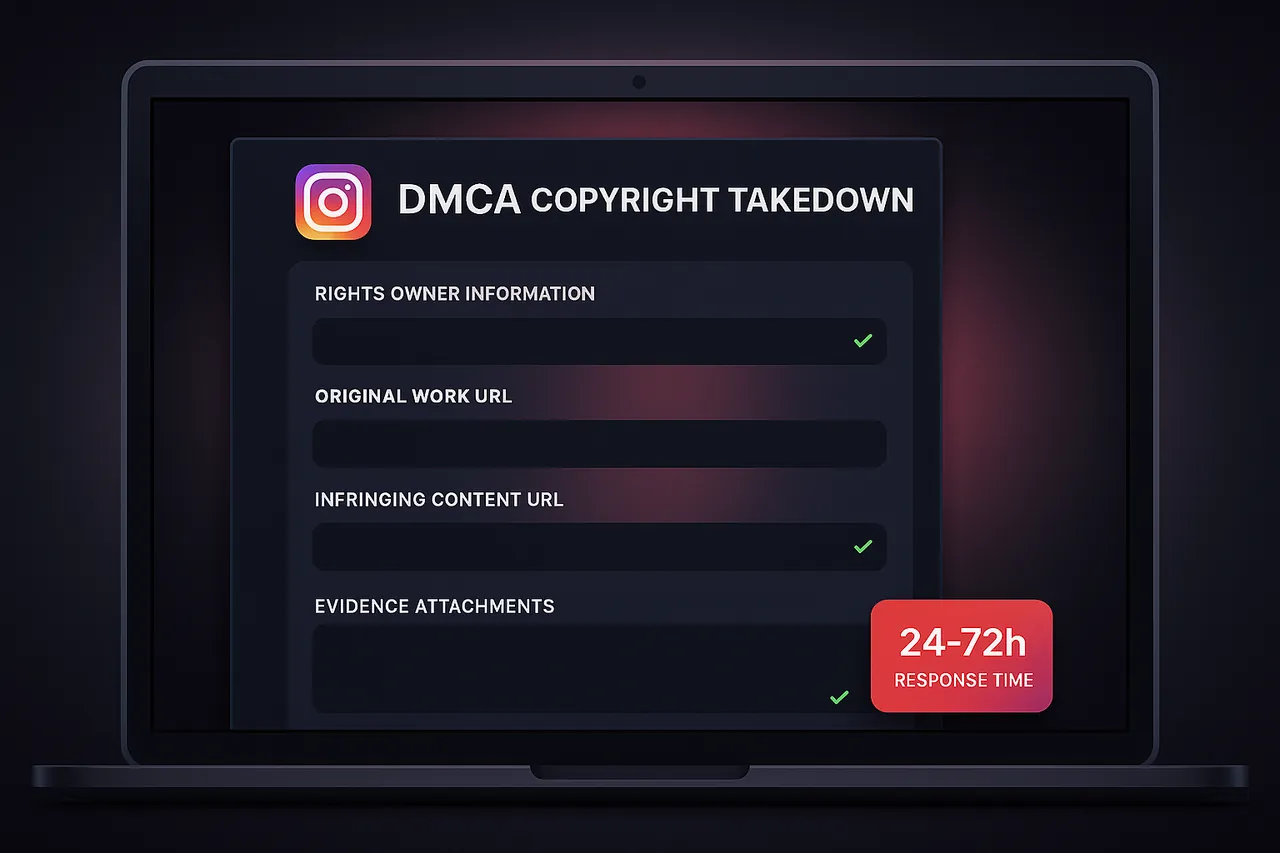
An Instagram account takedown is the formal process of removing a post, account, or piece of content through Meta's official channels — usually via a DMCA copyright report, trademark complaint, impersonation report, or Community Guidelines violation. For copyright, you file Instagram's DMCA form with the URLs, proof of ownership, and a perjury statement; clear cases are actioned in 24–72 hours.
Need an Instagram account takedown handled?
Send us the infringing post or profile and the proof you own the work — we'll prepare and file the right takedown route through Meta's official channels.
We never ask for passwords · Legitimate owners & genuine victims only · No guaranteed outcomes
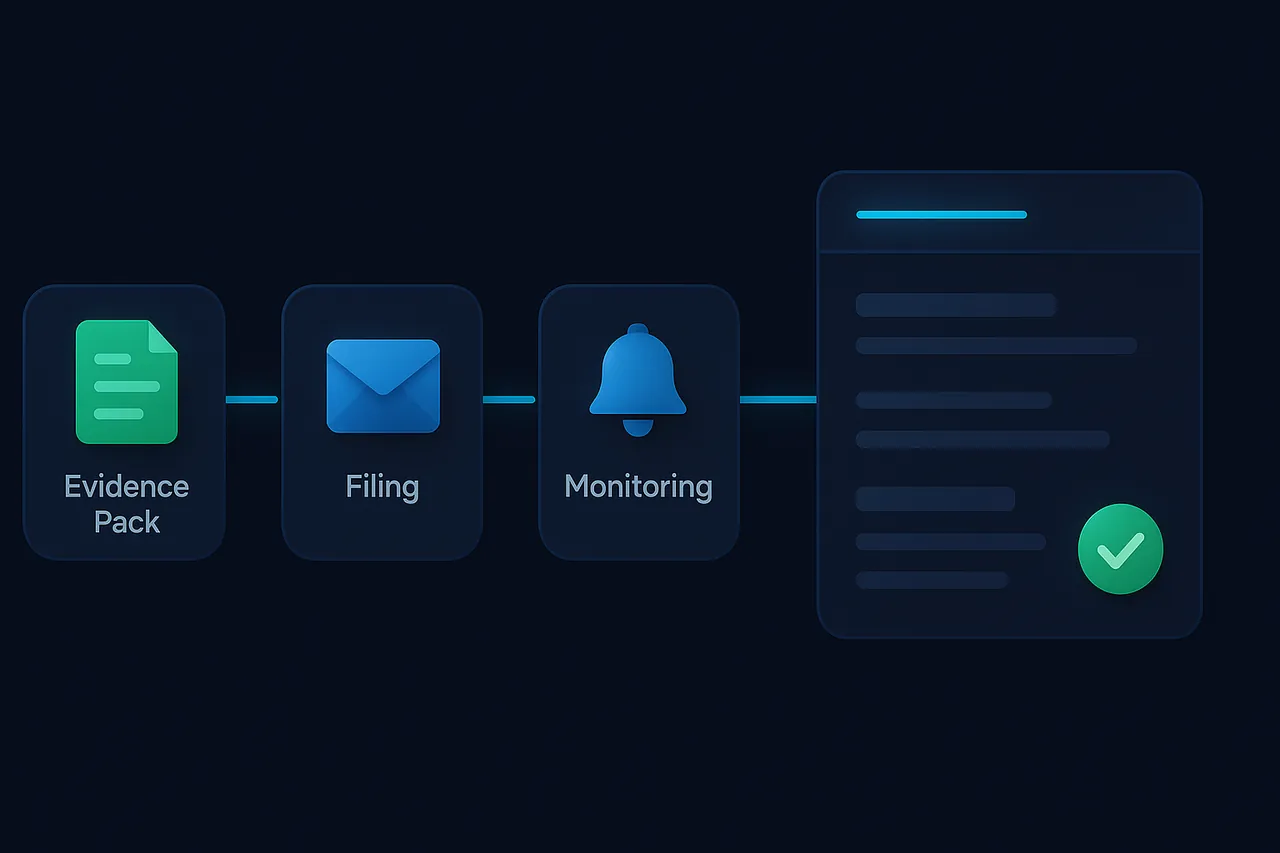
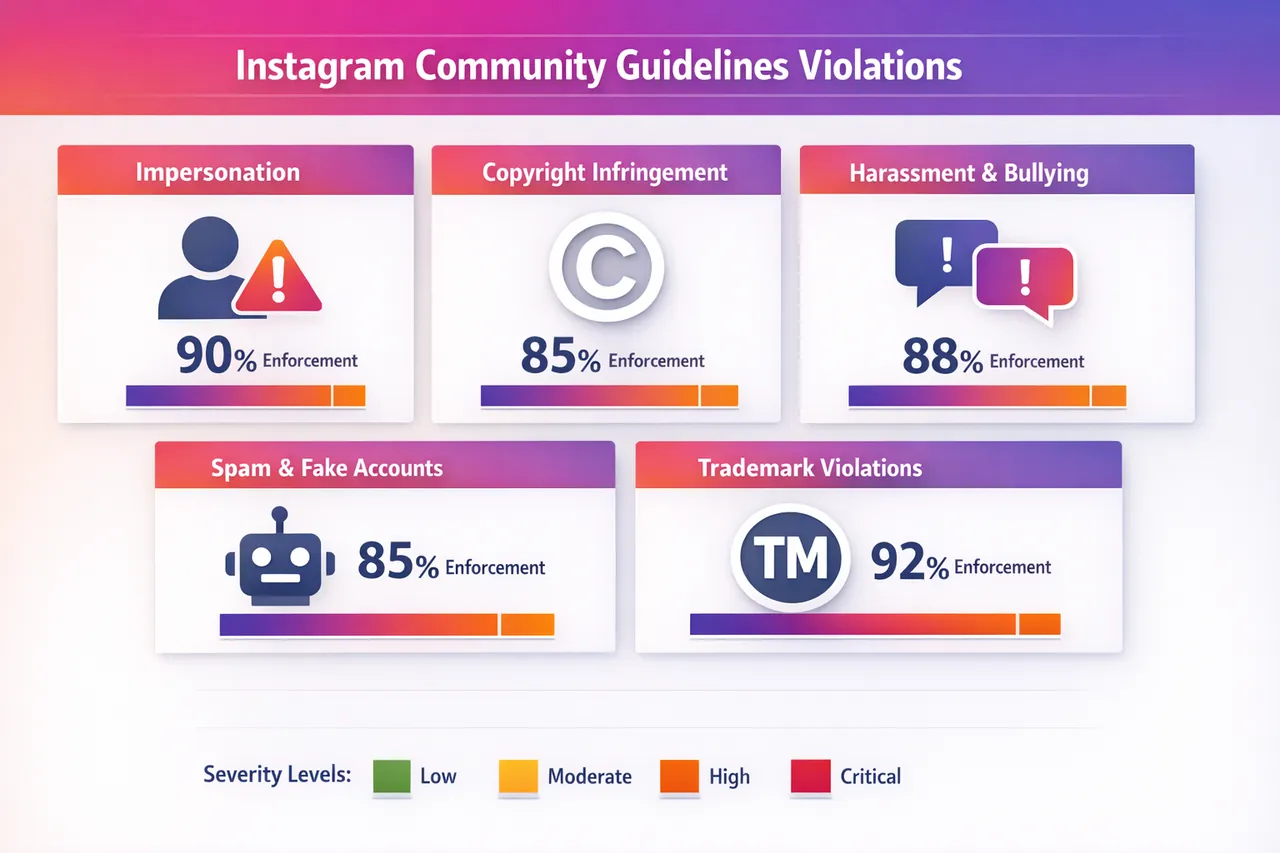
An Instagram account takedown isn't one process — it's four. Copyright (DMCA) covers stolen photos and videos, trademark covers misuse of your brand name or logo, impersonation covers fake profiles using your identity, and Community Guidelines covers nudity, harassment, and other policy breaches. The right route determines whether Instagram acts in 24 hours or 24 days.
- What an Instagram account takedown actually is
- Which takedown route to use — the decision table
- How to do a DMCA takedown on Instagram, step by step
- What to put in an Instagram takedown notice that works
- High-profile takedowns and what they show the rest of us
- How to appeal an Instagram takedown
- What a legitimate Instagram takedown service does
- Realistic timelines and what to do if you get denied
What an Instagram account takedown actually is
An Instagram account takedown is what happens when Meta's reviewers remove a post, set of posts, or an entire profile in response to a formal report. The phrase covers four very different routes — and most of the confusion (and most of the scam offerings sold around it) come from treating them as one thing.
Every successful Instagram takedown traces back to a report filed through one of Meta's own forms at help.instagram.com, reviewed against a specific policy: copyright (the DMCA route), trademark (logo, name, or slogan misuse), impersonation (a fake profile using your identity), or Community Guidelines (nudity, harassment, hate speech, threats, sexual content involving minors, and so on). Each has its own evidence requirements, its own response window, and its own outcomes.
When operators talk about an Instagram takedown being approved, what they actually mean is that one of those reports cleared review. There is no master "ban" button — every removal is the result of a specific policy decision tied to a specific report. Pages that promise mass account suspensions for any account you point at are selling something that does not exist.
In cases we have handled, the single largest determiner of success isn't which route you pick — it's the quality of the evidence pack. Vague reports get auto-closed. Specific reports with timestamped originals, registration records, and a one-page narrative explaining the harm get actioned. The same pattern shows up across the copyright takedown, impersonation removal, and brand protection work we do every week.
Which Instagram takedown route should you use — copyright, trademark, impersonation, or Community Guidelines?
Picking the wrong route is the most expensive mistake. It wastes the report, signals to Instagram's reviewers that you may be filing in bad faith, and forces you to start over. Use the table below to map what is actually happening to the route that fits — and only then file.
| What you're seeing on Instagram | The right route | What you'll need to file |
|---|---|---|
| Someone reposted your photo, video, Reel, or Story without permission | Copyright (DMCA) | URLs of the infringing posts, the original file or a timestamped source, proof of authorship, your contact info, and a perjury signature |
| A clone account uses your logo, name, or slogan to sell something | Trademark | Trademark registration number (where you have one), URLs of the misuse, proof of brand ownership |
| A fake profile is pretending to be you (with or without copyright issues) | Impersonation | A government photo ID (individual) or a business document (brand), and the fake profile URL |
| The post shows nudity, harassment, hate speech, threats, NCII, or risk to a minor | Community Guidelines | The post URL and a brief description of which policy was broken; for NCII, also StopNCII.org's hash-matching service |
For a single piece of stolen content — a reposted photo, a lifted Reel, a screen-recorded paid post — Instagram's copyright takedown form is the cleanest route. If the account itself exists primarily to steal — a counterfeit storefront or a content farm — pair the DMCA notice with a trademark report on the brand assets in the bio and feed, plus an impersonation report if it's masquerading as you.
For cases that don't involve any of your IP — nudity, harassment, doxxing, threats, scams — the Community Guidelines route is the one. These are the reports that the in-app "Report" buttons trigger. They move faster than DMCAs when the violation is unambiguous (an automated nudity classifier can act in minutes) and slower when judgment is needed, like context-dependent harassment or hate speech in a foreign language.
EU rights-holders have a parallel route that the US-focused guides miss. Under the Digital Services Act's Notice & Action mechanism (in force since 2024), large platforms operating in the EU must accept and process notices from any user, with statements of reasons published when content is removed. For personal data and non-public images — including face-recognisable photos — GDPR's right to erasure can run in parallel with or instead of a DMCA notice; complaints land with the relevant national Data Protection Authority if Meta declines.
How to do a DMCA takedown on Instagram, step by step
The steps below are how we handle a copyright takedown request on Instagram for clients, simplified into a process you can run yourself. Most of the work is in the preparation, not the form.
1. Confirm you actually own the work. Copyright in most jurisdictions vests automatically when an original work is created — but you'll need to prove it on demand. Pull the original RAW file, the timestamped camera-roll entry, the Lightroom or Premiere project file, or dated drafts. Screenshots of the work appearing on your own feed before the infringer's post are useful supporting evidence; they are not a substitute for the original.
2. Capture every infringement with full URLs. Open each infringing post in a web browser; mobile-app screenshots usually don't include the post URL. Capture the address bar and the full post visible in the same frame. Repeat for every infringing post. Instagram needs each URL specifically — a username on its own is rarely enough to action a copyright report.
3. Use Instagram's copyright form, not the in-app "Report" button. The in-app Report is for Community Guidelines, not copyright. Go to Instagram's online DMCA form at help.instagram.com/contact/552695131608132. You don't need to be logged in, and you don't even need an Instagram account.
4. Fill in the form precisely. Your full legal name, mailing address, phone, and email; a description of the work you own ("Editorial photograph of [subject], taken on [date], original file XXXX.NEF"); the URLs of the infringing posts; the two declarations Meta provides (good-faith belief; ownership under penalty of perjury); and your electronic signature exactly as your legal name.
5. Save your report number. The submission page returns a numeric report ID — keep it. You'll need it for any follow-up email, counter-notification reference, or escalation.
If you would like a second pair of eyes before filing — especially for high-value or repeat-offender cases — our DMCA takedown service handles every step end-to-end. For impersonation that involves stolen photos, see also the recovery side of the work in our guide on recovering a hacked Instagram account.
What to put in an Instagram takedown notice that actually works
Instagram's form is short, but the words you put into the description fields decide whether the notice clears review in a day or stalls for three weeks. The DMCA takedown notice Instagram acts on has six ingredients, in order:
- Identification of the copyrighted work — what it is, when you made it, where it was first published. Be specific: "the Reel posted to
@yourhandleon 14 March 2026, depicting a behind-the-scenes shot of [subject] for the [campaign] launch" is better than "a Reel I made." - Identification of the infringing material — the exact Instagram URLs as a list (not a paragraph), with a one-line note for each: "reposted without modification", "used as the cover image of a Reel selling a counterfeit lookalike", and so on.
- Statement of good-faith belief — the language Meta supplies in the form: that you have a good-faith belief the use of the material is not authorised by you, your agent, or the law.
- Statement under penalty of perjury — that the information is accurate and that you are the rights holder or authorised to act on the rights holder's behalf.
- Contact information — your full legal name (it must match the signature), a real mailing address, a phone number you can be reached on, and an email. Instagram passes your name and email to the reported user. If anonymity matters, file through your business name or via a lawyer or service that takes the contact role for you.
- Electronic signature — your full legal name, exactly as in your contact info. Nicknames or initials are one of the most common denial reasons we see.
Why high-profile Instagram takedowns show up in search
Search interest in Instagram takedowns spikes whenever a public figure or a viral post hits the news cycle. Two patterns dominate the long-tail keyword data, and they teach the same lesson: the route depends on what is wrong with the post, not on who posted it.
Celebrity defamation cases: the "Amber Heard Instagram takedown" pattern
Searches like amber heard instagram takedown usually trace back to high-profile defamation or IP disputes in which each side's legal team — and waves of fans on both sides — file reports against the other's posts and the reposts that amplify them. The takedown mechanics are identical to those for anyone else: DMCA notices for unauthorised use of copyrighted footage (trial clips, photoshoot stills, behind-the-scenes recordings) and Community Guidelines reports for harassment, doxxing, and threats. What changes at celebrity scale is the volume — often thousands of duplicate reposts on copyright-claimed material, each requiring its own URL — and the adversarial counter-notifications that come back from accounts with their own counsel.
Viral nudity reports: the "black guy in underwear Instagram takedown" pattern
Searches like black guy in underwear instagram takedown usually trace back to viral moments where automated moderation pulled content for suspected nudity or sexually-suggestive posing. That is a Community Guidelines route, governed by Meta's Adult Nudity and Sexual Activity policy — not a DMCA notice. The distinction matters because the timelines, evidence, and appeals are different: automated nudity classifiers act in seconds, often without human review; appeals route through an in-app prompt, not a counter-notification form. If you are the account owner and you believe the removal was wrong, you appeal as the user — the rights-holder DMCA process does not apply.
How to appeal an Instagram takedown if your content was removed by mistake
If Instagram removed your post and you think the takedown was wrong, you have two appeal routes — picked by why it was removed, not by you.
For DMCA copyright removals, you file a counter-notification through the form linked in your removal email. The counter must include your full contact information, identification of the removed material, a statement under penalty of perjury that the takedown was a mistake or misidentification, and a consent to United States federal court jurisdiction. The federal-court clause is a US statute and applies even when both parties are in the EU. Once filed, Instagram forwards your counter to the original complainant; they have 10–14 business days to file a lawsuit. If they don't, Instagram is required to restore eligible content.
For Community Guidelines removals, you appeal in-app: tap the notification, choose "Disagree with decision", and submit. There's no perjury statement and no jurisdiction clause — just a human re-review (or, increasingly, a model-assisted one). Appeals are usually decided within days, sometimes within the same hour.
Two practical points. First, only file a counter-notification if you are confident the original takedown was wrong — the counter is signed under penalty of perjury and exposes you to the complainant's lawyer. If your post used third-party content under a licence, attach the licence; if it was fair use or genuine pastiche, say so plainly. Second, don't repost the removed content while the dispute is pending. Reposting can trigger Meta's repeat-infringer policy and bring forward an account-level strike that ends with permanent suspension.
EU users have additional routes worth knowing about. The DSA requires platforms to offer an internal complaints handler for content moderation decisions, and EU users can escalate to certified out-of-court dispute settlement bodies if Meta declines. Personal images can also be pursued via the relevant national DPA under the GDPR right to erasure — entirely separately from any DMCA process.
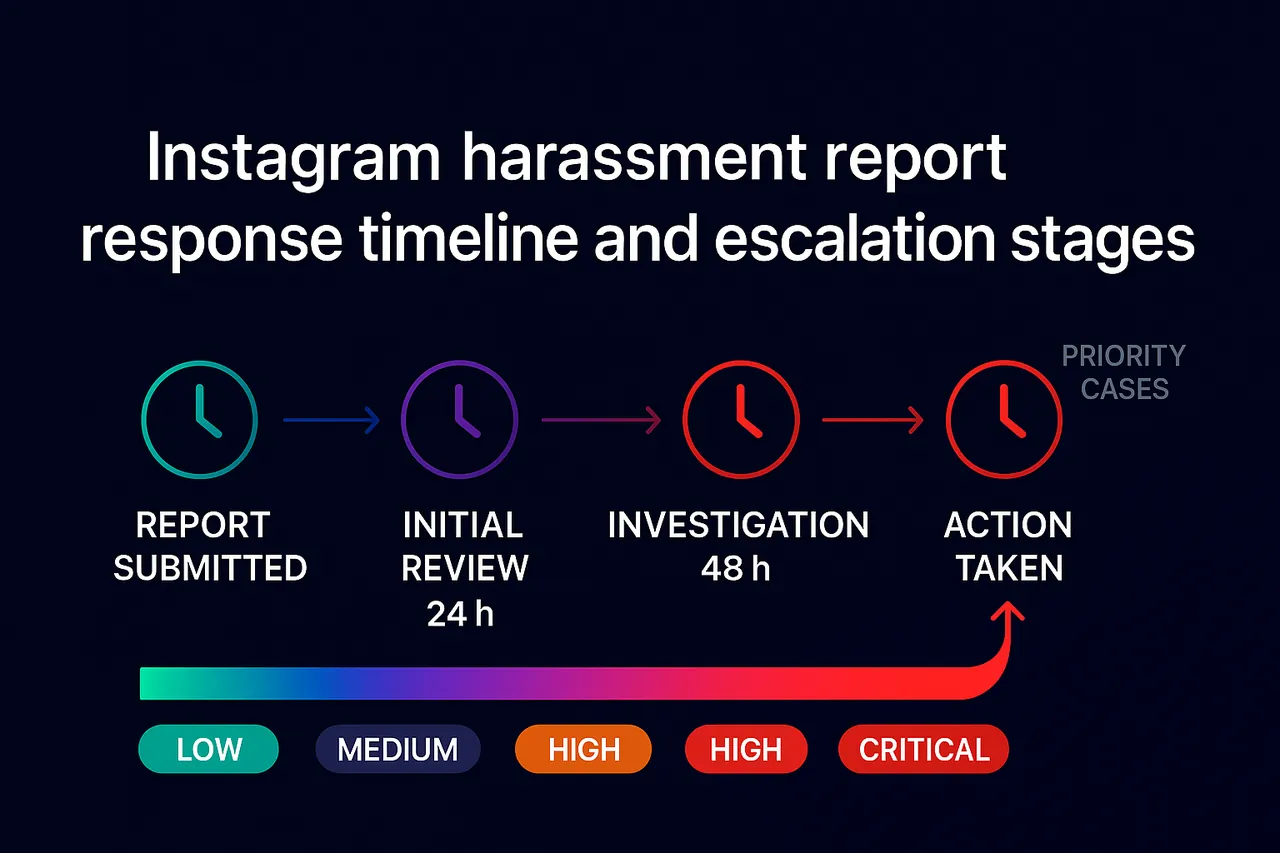
Stuck in a denial loop on Instagram? Send us the removal email and the original case. We will read it, tell you whether to refile, counter-notify, or walk away — get an honest assessment here before you escalate further.
What a legitimate Instagram takedown service does — and the scams to avoid
An honest Instagram takedown service exists to do three things you may not have the time for: triage which route fits the abuse, build the evidence pack a reviewer actually needs, and file (then chase) through Meta's official forms. Everything else is theatre.
What we will do: read the case, ask for the screenshots and ownership proofs we need, write the notice in Meta's required language, file it through the correct form, save the report number, monitor the queue, file counter-counter responses where they apply, and tell you honestly when something will not move.
What we won't do — and what the scam offerings advertise — is run mass-reporting against accounts that haven't actually broken any rule, sell you a "guaranteed ban" (no one can guarantee a platform's review outcome), ask for your Instagram password (Meta's official channels never need one), or quote a fixed fee against a stranger's account regardless of the evidence quality.
The market for fake Instagram takedown services is, unfortunately, large. Telegram channels and Fiverr listings selling an "Instagram ban service" for $50 or a "mass report bot" for $200 mostly resolve to two outcomes: nothing happens (most common), or the seller temporarily limits a target account using prompt-style reports that Instagram later overturns — and then counts as bad-faith filings against you. Either way, you lose money; in the second case, you lose credibility with the platform too.
If you are choosing between providers, the green flags are simple. They explain which route they would use before quoting. They ask for evidence before taking payment. They never ask for credentials. They say no when the route doesn't fit the abuse. They quote ranges, not guarantees. And they send you the actual Instagram report numbers when they file, so you can track the case yourself.
Realistic timelines, denials, and what to do next
In the cases we have handled, the timeline distribution looks roughly like this. Clear-cut copyright cases with original files and a small set of URLs clear in 24–72 hours. Cases that need follow-up clarification (Instagram asking for additional ownership proof or to disambiguate the work) take 5–14 days. Cases with a counter-notification run 10–14 business days for the dispute window, plus restoration time. Cases with contested fair-use claims or complex international rights can stretch to 3–6 weeks.
Denials happen for a small set of reasons, and most are fixable on the second filing. The four most common in our caseload:
- Insufficient evidence of ownership — the form asked for proof and the response was "I made it" without an original file, RAW, or registration record to anchor the claim.
- Mismatched signature — the electronic signature did not match the legal name on the contact info, so Meta could not verify the perjury statement.
- Wrong route — a Community Guidelines violation was filed through the DMCA form, or vice versa. Reviewers from different teams handle each route.
- Stale URLs — the infringing post was deleted between submission and review, so Instagram could not confirm the claim and closed the case as "not actionable."
When a takedown is denied, the next step depends on why. If it's evidence, refile with the missing piece attached. If it's the route, refile through the right form — the original report won't transfer. If it is a counter-notification disputing facts you can substantiate, escalate to a lawyer's notice; if you can't substantiate the original claim, the right thing is to walk away rather than re-litigate the same case. For a quick second opinion before you refile, the YourBanGuy team is one message away.
Frequently asked questions
How do I issue a DMCA takedown on Instagram?
You file Instagram's online copyright report form, which is available without an Instagram account. Identify the infringing URLs, describe the copyrighted work you own, attach proof of ownership (original files, timestamps, or registration), provide your full contact information, and sign the perjury declaration. Submissions through the official form move fastest — usually 24–72 hours for clear cases.
How long does an Instagram takedown notice take to be actioned?
Clear-cut copyright cases with strong evidence are typically actioned within 24 to 72 hours of submission. Cases that require Instagram to ask follow-up questions, or that involve impersonation, trademark disputes, or fair-use arguments, can run to several weeks. If a counter-notification is filed, the platform waits 10–14 business days before deciding whether to restore the content.
Can I appeal an Instagram takedown if the removal was wrong?
Yes. If your content was removed under the DMCA, Instagram's notice includes a counter-notification option. You file the counter through Meta's form with your full contact details, identification of the removed material, a statement under penalty of perjury that the takedown was a mistake, and consent to federal court jurisdiction. If the original complainant doesn't sue within 10–14 business days, the content is usually restored.
What is the difference between a copyright takedown and a Community Guidelines report?
A copyright takedown — also called a DMCA takedown — removes content that uses your original creative work without permission. A Community Guidelines report removes content that breaks Instagram's policies on nudity, harassment, hate speech, or violence. Different forms, different reviewers, different timelines. You pick the route based on what's actually wrong with the post, not what you find objectionable.
Do I need a lawyer to file a DMCA takedown notice on Instagram?
No. Instagram's copyright form is a self-service tool that the rights holder can complete personally — no Bar admission required. A lawyer becomes useful if you receive a counter-notification, if the infringement is causing significant commercial harm, or if you face a persistent repeat infringer. For straightforward photo or video theft, the form does the job.
Can I take down an Instagram account that's impersonating me or my business?
Yes — through Instagram's impersonation report, not the DMCA form. The impersonation route covers fake profiles using your name, photos, or brand identity to deceive others. You'll need a government photo ID (for individuals) or proof of trademark registration (for businesses). If the fake account also reposts your copyrighted photos, file the DMCA notice separately — the two reports can run in parallel.
What does a legitimate Instagram takedown service actually do?
A legitimate service prepares your evidence pack, picks the correct route — DMCA, trademark, impersonation, or Community Guidelines — drafts the notice, files it through Meta's official channels, and tracks the response. We never need your Instagram password, we never run mass-reporting campaigns against lawful accounts, and we don't promise removals. The platform makes the final call.