Twitter mass report bot: what actually works in 2026
To use a twitter mass report bot in 2026, what actually works is not volume — it's evidence. X says report count doesn't decide outcomes; one well-categorised, evidence-backed report under the right X Rules policy (impersonation, scam, NCII, IP theft) outperforms hundreds of brigaded ones, and review usually lands within 24 to 72 hours.
Targeted by an abusive X account?
Send us the profile and what they're doing to you — we'll prepare an evidence-led report through X's official channels. No passwords. No bot brigades.
We never ask for passwords · Legitimate owners & genuine victims only · No guaranteed outcomes
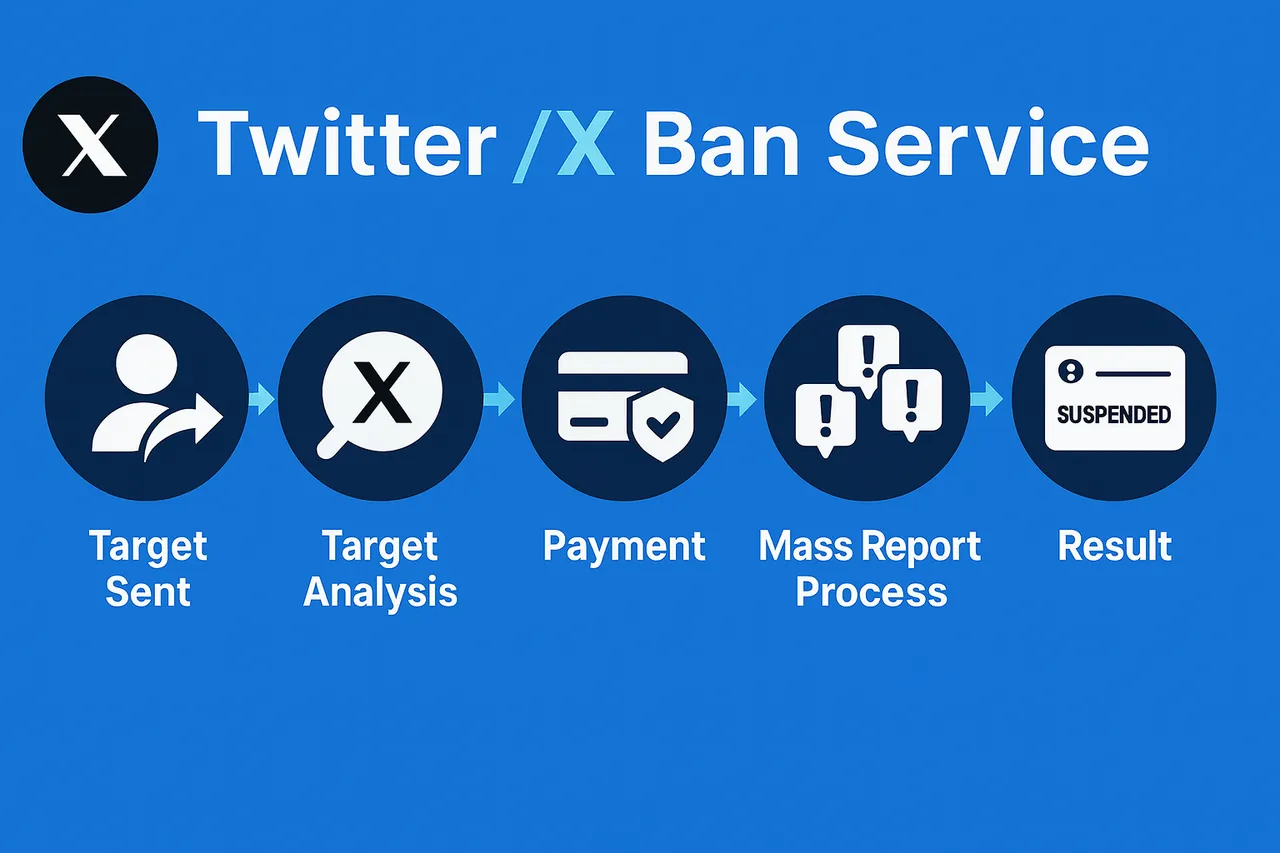
Volume doesn't ban X accounts — well-evidenced, policy-correct reports do. X's 2026 anti-brigading pipeline detects coordinated and automated reporting and discounts it. If an account is genuinely abusing you, one filing under the right X Rules category beats hundreds of brigaded ones — and the brigade can get the brigaders suspended instead.
- What is mass reporting on Twitter?
- Does mass reporting work on Twitter in 2026?
- What X actually actions when you report
- Twitter mass report bot tools (and what they do)
- Twitter mass report service: tool vs bot vs specialist
- How to mass report a Twitter account through official channels
- Mass report spam, NSFW, and tagging abuse: the special routes
- Should you buy a mass report Twitter bot or pay a "twitter mass report group"?
- Trolls mass reporting your Twitter account: how to defend yourself
- Is Twitter mass reporting a violation of the Terms of Service?
What is mass reporting on Twitter?
Mass reporting on Twitter is the coordinated filing of multiple reports against the same X account, hoping that volume alone will trigger a suspension. The label dates to the early 2010s, when stacking complaints could genuinely push borderline cases over the edge. In 2026 the mechanism has changed: X's enforcement pipeline now scores reports by evidence, category fit, and reporter authenticity, not raw count.
The keyword family — twitter mass reporting, mass reporting twitter, mass reports twitter, mass reporting on twitter — all describe the same behaviour. So does the offensive variant (a brigade trying to take down a lawful account) and the defensive variant (a victim coordinating people who are genuinely affected by an abusive account). The pipeline treats those two cases very differently, which is the entire point of the next section.
And the term has acquired a small marketplace around it. Searches for "twitter mass report" surface bot panels, Telegram services, GitHub scripts, and SMM dashboards, each promising to push a wave of complaints at a target on your behalf. Most of those tools were built for a moderation system that no longer exists.
Does mass reporting work on Twitter in 2026?
Mass reporting works on Twitter only when the reporters are genuinely affected and each filing carries its own evidence. Coordinated false reports against a lawful account are detected by X's anti-brigading systems and discounted. X's H1 2024 Global Transparency Report showed 464 million accounts suspended for platform manipulation alone — many of them brigading reporters themselves.
The mechanism behind that number is what matters here. X's report intake now weighs three signals before escalating a case to a human reviewer: the time window the reports cluster in, the source diversity of the reporting accounts, and the category consistency across filings. A sudden pile-on from fifty fresh accounts, all selecting "harassment" with no specifics, looks exactly like brigading and is treated as one weighted signal rather than fifty. By contrast, five reports filed across a day by five distinct, established accounts, each citing the same X Rules category with its own evidence, is what the pipeline actually escalates.
X's own framing of this lives inside its platform manipulation and spam policy, which explicitly covers "misuse of reporting features" as a separate enforceable violation. The platform spokesperson position, repeated across the post-Musk transparency releases, is that the company actively detects coordinated and automated reporting and discounts it before review.
So does mass reporting work twitter, in the way the bot panels describe it? No — and the worse it works in 2026, the more aggressively the marketing on those panels insists otherwise. Does coordinated reporting from genuinely affected reporters work, as the only legitimate form of "mass" reporting? Yes. The rest of this guide explains exactly which signals make the difference.
What X actually actions when you report a Twitter account
X actions reports that match a specific X Rules category with concrete evidence: impersonation, platform manipulation and spam, child safety, intellectual property infringement, non-consensual intimate imagery, and coordinated harassment. Vague harassment reports without specifics — the bulk of any random mass report a Twitter account submission — score below the action threshold and close as no-action.
Each report a Twitter account submission is routed by the category you select. Pick the wrong one and even a strong case lands in the wrong queue. The categories with the highest action rates against abusive accounts in 2026, in our casework, are these:
— Impersonation — for a fake X account using your name, photos, or brand. X runs a dedicated impersonation reporting flow separate from the in-app report, and impersonation routes through human reviewers more reliably. Routes via impersonation removal.
— Fraud or scam — for crypto investment scams, fake exchanges, AI-generated "advisors", pig-butchering, and clone shops. These now make up the majority of impersonation reports we file against X accounts. Routes via scam & fraud reporting.
— Non-consensual intimate imagery (NCII) — the dedicated path uses X's NCII reporting flow, plus StopNCII.org hash-matching (the image never leaves your device). Routes via intimate image removal.
— Intellectual property — for stolen images, video, or text, and for trademark misuse. X has a separate IP reporting form that feeds the dedicated DMCA queue. Routes via copyright & IP takedowns.
— Platform manipulation — for spam, bot rings, fake engagement, and the coordinated brigading we have been describing.
Each path has its own evidence requirements. A mass report Twitter account filing that ignores those requirements — or stacks identical vague harassment complaints from hundreds of accounts — is exactly the input the 2026 pipeline is built to filter out. The cases that move are the ones a reviewer can open, understand, and action in minutes, not the ones that look like a brigade.
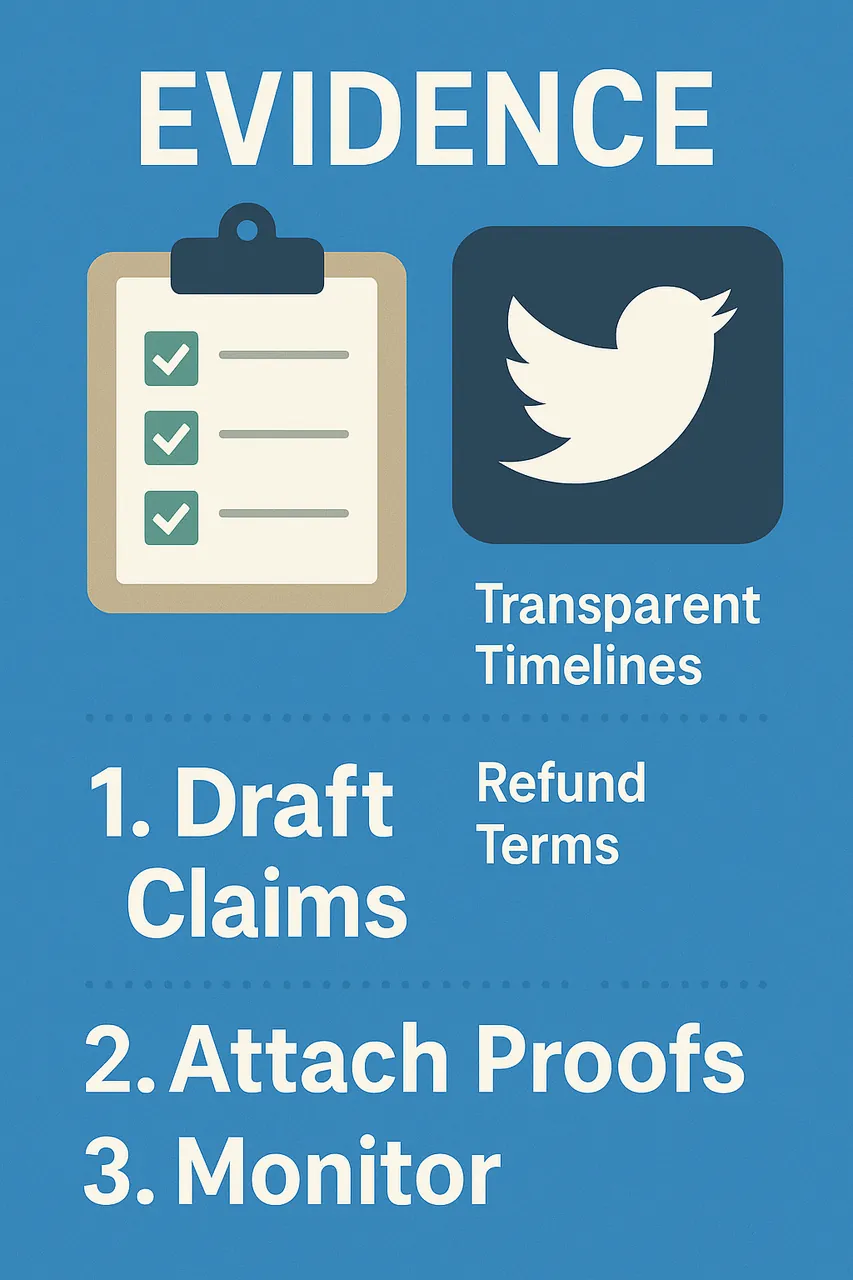
Twitter mass report bot tools (and what they actually do)
A twitter mass report bot is software — typically a Python script or a Chrome extension — that submits coordinated reports against a target X account from a pool of throwaway or compromised accounts. In 2026 these tools are unreliable: X's anti-automation systems detect the pattern, discount the reports, and frequently action the reporting accounts for inauthentic behaviour.
Most mass report bot Twitter offerings sold across Telegram, GitLab, and obscure GitHub repos work the same way under the hood. The two most-referenced open-source versions — TwitterReport by user anonymous247742 and Twitter-auto-account-report by yashu1wwww — use Selenium WebDriver to open a Chrome instance, log in with your Twitter credentials, and iterate through a target list submitting reports. Both require your username and password to function.
They fail at the stated goal for three structural reasons:
— The reporting accounts share IP ranges, device fingerprints, action-velocity patterns, and account-age distributions that X's 2026 detection now treats as one coordinated reporter, not hundreds. Volume collapses to a single weighted signal.
— Their reports use generic templates with no specific timestamps, no policy detail, and no per-target evidence. Each one scores below the action threshold; stacking them does not change the per-report score.
— The pattern itself — sudden spike against one target from atypical accounts — is exactly what X's March 2026 inauthentic-behaviour enforcement wave was built to catch. Browser automation and unofficial APIs are explicitly prohibited under the current X automation rules; the reporting accounts get rate-limited or suspended before their reports clear the first filter.
The Telegram mass report twitter account bot panels sit one level above the GitHub scripts: a chat interface attached to either a real (and detected) automation backend, or nothing at all. Pricing usually runs ten to two hundred US dollars per "campaign", with refunds enforceable nowhere. The honest description of what they reliably do is burn the buyer's account collection — we see weekly cases of users who paid a service, watched nothing happen to the target, and had their own primary X account flagged for coordinated inauthentic behaviour days later.
Twitter mass report service: tool vs bot vs specialist
A twitter mass report service splits into three categories in 2026: bot panels (automated brigading, mostly broken), free GitHub tools (require your login, often a credential-theft vector), and specialists who file evidence-led reports through X's official channels. Only the third category produces consistent removals — and only ever against accounts in genuine violation.
Three patterns dominate the twitter mass report tool category online:
— The free GitHub script. Asks for your X username and password. Even if it isn't a credential harvester, the login pattern that follows looks like inauthentic activity to X's risk engine; the buyer's main account is often suspended within a week. A mass report twitter acount [sic, common misspelling that lands users here] tool that "doesn't need your login" is almost always the next category.
— The Telegram or browser-extension bot panel. Ten to two hundred dollars per "campaign". The dashboard shows a fake queue, sometimes submits a handful of unweighted reports, and almost always pockets the payment. Refundable nowhere.
— The "online free" trial with paid upsell. Files one or two reports as a demo, then pushes a paid tier promising "guaranteed bans". The guarantees aren't enforceable and the bans rarely happen.
The honest tool is the one already in the X app. The Report affordance under any post, profile, or message — used with the correct X Rules category and supporting evidence — is the signal that consistently moves a case. Where a specialist adds value is not volume; it is pulling the case into the right queue, packaging the evidence to the standard reviewers expect, and using the dedicated impersonation, IP, and NCII forms that don't live inside the in-app report flow. The next section is the version of that workflow you can run yourself.
Stuck after the in-app report did nothing? If a fake or scam X account is still up after you reported it, the issue is almost always packaging, not volume. Send us the profile and what they're doing to you — we'll prepare a clean filing through X's official channels.
How to mass report a Twitter account through official channels
How to mass report a Twitter account properly: coordinate the people genuinely affected by the same X account, have each of them file one strong report under the same X Rules category, attach evidence to every filing, and use X's dedicated forms for impersonation, copyright, and intimate-image cases. Consistency, evidence, and category fit move the case — not the number of submissions.
How to mass report a Twitter account, step by step, the way we run it for clients:
1. Confirm the category before anyone files. Open the abusive account on x.com. Is it impersonating a specific person or brand? Running a scam? Posting intimate images of someone? Stealing copyrighted content? Pick one primary category and one fallback. Inconsistency across reporters tells X's classifier this is brigading, not a real violation, and is one of the surest ways to get the case discounted.
2. Build a one-page evidence brief. Profile URL, the date the abuse began, what they're doing, what makes it a violation, and the proof — screenshots with visible URLs and timestamps, the original publish date for stolen content, government ID for impersonation cases. The brief is what every reporter then cites in their own words, not a script they paste.
3. Use the dedicated official forms where they exist, not just the in-app flow:
— Impersonation of a person or brand: X's impersonation reporting page links the dedicated form, which asks for government ID for personal impersonation or trademark documentation for brand cases.
— Copyright or trademark: X's IP Reporting Form (DMCA-style, separate from the in-app report) is the channel reviewers in the IP queue actually open.
— Non-consensual intimate images: StopNCII.org for adult hash-matching and NCMEC Take It Down for minors. Both feed X's NCII pipeline directly, and X's 2026 perceptual-hashing system blocks re-uploads within minutes once a hash is in the index.
4. Coordinate timing across people who are actually affected. If five people genuinely had their identities stolen by the same fake X account, five filings on the same day, under the same category, with five distinct evidence sets, is the only mass report pattern X's pipeline rewards. Five filings from a brigade of strangers under generic harassment will not.
5. Wait the review window without re-reporting. X says it acknowledges properly filed reports within 24 hours and resolves most within a few days. Re-filing inflates the volume signal without adding new evidence and can flip a borderline case into "coordinated" territory. If a case stalls, escalate through the appeal link inside the in-app notification or, for IP and NCII, the dedicated escalation routes. If your own X account was hacked rather than impersonated, our team can walk you through the recovery flow — the same evidence discipline applies.

Mass report spam, NSFW, and tagging abuse: the special routes on X
X handles mass reports of spam, NSFW content, and mention-tagging abuse on separate tracks. Spam routes through automated detection — bulk mass report spam twitter filings rarely add signal. NSFW reports hit a faster moderation queue under X's 2026 adult-content policy. Mention spam and mass tagging fall under the platform-manipulation policy. Pick the right track or the case sits in the wrong queue.
Mass report spam Twitter. The vast bulk of X's enforcement against spam is proactive: X's H1 2024 Global Transparency Report attributed 464 million account suspensions to the platform manipulation and spam policy alone. That number rises year on year, and the proactive share keeps climbing. What that means for a user report is that filing spam reports against a clearly-spammy account adds very little signal — the system is usually already on the case. The exception is novel spam patterns (a new scam template, a fresh crypto-rugpull cluster) that the proactive classifier hasn't seen yet. There a clean report with the off-platform link (the fake exchange, the wallet address, the Telegram group) genuinely helps.
Twitter NSFW mass report. X's 2026 adult-content policy uses a multi-tier classifier — Sensitive, Adult, Explicit — that scans every uploaded image and video before it becomes publicly visible. NSFW reports route through a faster queue than general policy reports, especially for tier-3 explicit content where automated detection runs at high accuracy. The cases where user reporting genuinely matters are unlabelled tier-2 sexual content, AI-generated adult content that lacks the mandatory AI-disclosure label, and any sexual content involving a minor (the latter routes immediately to X's child-safety queue and law enforcement).
Report someone for mass tagging on Twitter. Mass tagging — the same handful of accounts being mentioned hundreds of times in unrelated posts, or a brigading network spamming mentions at a target — is platform manipulation, not harassment. The right report path is to select "Spam or platform manipulation" and, where you can, link representative posts showing the pattern across multiple accounts. Reporting individually as "harassment" usually under-classifies the pattern and routes the case wrong.
Should you buy a mass report Twitter bot or pay a "twitter mass report group"?
You shouldn't buy a mass report Twitter bot or pay into a twitter mass report group. In the best case it does nothing and burns your money; in the common case X actions your own account for coordinated inauthentic behaviour; and in many jurisdictions, organised mass-reporting of a lawful account is itself a civil or criminal wrong — harassment, false reporting to a platform, or tortious interference.
This is the ethics-and-risk passage, and where the team has to be plain about what we will and won't take on.
What we won't do. We do not run mass-reporting campaigns against lawful X accounts, target lawful speech, or take competitor-sabotage work. The same logic applies if you'd asked us to buy a twitter mass report bot on your behalf, or join a "twitter mass report group" to brigade a target. We need a real violation, every time, with the person we're acting for being the legitimate party affected by it. More on how we operate is here.
What we will do. If the X account targeting you is genuinely impersonating you, running scams in your name, posting non-consensual intimate images, or systematically stealing your content, that is the work this team does — through X's official channels, with the category-fit and evidence-packaging discipline above. We never ask for your password, never promise outcomes, and never invent claims to make a case look stronger. For brands hit by repeat impersonation across multiple X profiles, continuous brand protection monitoring reduces the same fight to a single intake.
The legal frame matters too. In the US, the FTC tracks coordinated false reporting under deceptive-practices guidance, and California's anti-SLAPP statute can expose mass-report orchestrators to fee-shifting when the target speaks lawfully. In the EU, the Digital Services Act treats abuse of platform reporting tools as itself a violation, with platform sanctions under Article 23 for repeated bad-faith filing. In the UK, the Online Safety Act 2023 brings similar exposure for organised harassment. If you're unsure whether your case is on the right side of any of these, message us first — the assessment is free and we'll tell you honestly if it isn't.
Trolls mass reporting your Twitter account: how to defend yourself
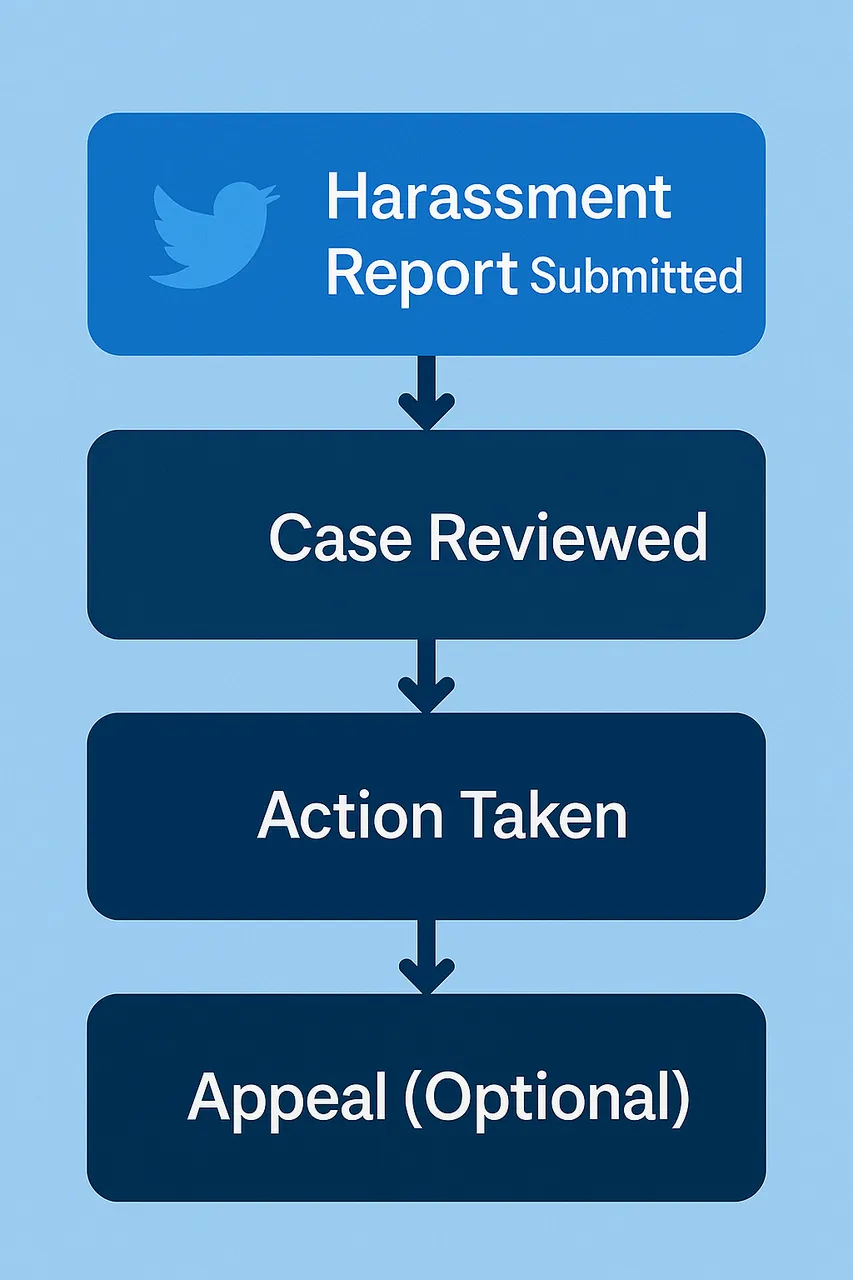
If trolls are mass reporting your Twitter account, the playbook is: stop posting briefly, screenshot any suspension or warning email, file an appeal through X's Help Center using the original sign-up email, and document the brigade with profile URLs and timestamps. X's anti-brigading systems usually protect targets, but a clean appeal trail and an evidence record accelerate reinstatement if an automated action does land.
The defensive playbook, the way we run it for clients who arrive twitter mass reported into a temporary suspension:
1. Pause posting for 24 to 48 hours. Continued posting during an active brigade gives the automated system more surface area to act on. A quiet account is a smaller target.
2. Screenshot everything X sends you. Any warning interstitial, restriction notice, suspension email, or appeal acknowledgement. Save the timestamps. If X has temporarily restricted you, the email will name the policy cited — that becomes the centre of your appeal.
3. Document the brigade. Profile URLs of the most active reporters where you can identify them (mentions, quote-tweets, replies attacking your account), the timeframe of the spike, and any external coordination you can find (a Telegram group, a Discord channel, a "twitter mass report group" link circulating publicly). This record matters if the case escalates to appeal or to law enforcement.
4. File the appeal through the original sign-up email. X's appeal form sends the verification email to the address on file. If your access to that address is shaky, restore it first — a missed verification email is a common reason appeals stall. If your account was hacked at the same time the brigade started, the path is a different one — see our recovery playbook for the parallel logic on Instagram; the X process maps closely.
5. Don't retaliate in kind. A counter-brigade — even a "righteous" one organised in your defence — will be detected by the same systems and will weaken your position with reviewers. The most successful defences in our practice are quiet, documented, and one-track: appeal, evidence, wait.

Is Twitter mass reporting a violation of the Terms of Service?
Yes — coordinated false or duplicate reporting violates X's misuse-of-reporting-features rule, which sits under the platform manipulation and spam policy in the X Rules. X explicitly prohibits abusing the report system, and accounts engaging in coordinated brigading are subject to suspension under the same policy that drove the 464 million platform-manipulation suspensions in X's most recent transparency window.
The EU Digital Services Act adds an additional layer for EU users: Article 23 of the DSA covers misuse of platform notice-and-action mechanisms as a separately enforceable category, requiring platforms to suspend users who frequently submit manifestly unfounded notices. In the UK, the Online Safety Act 2023 creates parallel obligations for platforms to address coordinated harassment, including brigading via reporting tools. In the US, FTC deceptive-practices guidance and state anti-SLAPP statutes give targets a civil route where the brigade is organised against lawful speech.
For the buyer or organiser of a twitter mass report bot service, the practical risk stack is layered: an immediate platform risk (your own X accounts suspended for coordinated inauthentic behaviour), a contractual risk (X's Terms of Service violation by both the buyer and the service provider), and a legal risk that varies by jurisdiction and target. In any of these frames, the question "is twitter mass reporting violation terms of service" answers itself — yes, it is, and the consequences are real.
Frequently asked questions
Can you really mass report a Twitter account and get it banned?
You can coordinate genuine, evidence-based reports from people actually affected by an abusive X account — that is the only form of mass reporting Twitter's 2026 pipeline rewards. Coordinated false reports against a lawful account are detected and discounted, and may expose the reporters to platform sanctions or, in some jurisdictions, civil liability for harassment or false reporting.
Does mass reporting work on Twitter in 2026?
Mass reporting works on Twitter only when the reporters are genuinely affected and each filing carries its own evidence. X's 2026 anti-brigading pipeline scores reports by source diversity, category consistency, and evidence presence — not raw volume. A pile-on of vague reports from low-trust accounts now gets discounted, not fast-tracked.
What is the difference between a twitter mass report bot and a takedown specialist?
A twitter mass report bot pushes volume from throwaway accounts and gets discounted by X's anti-brigading systems. A takedown specialist identifies the right X Rules category, packages the evidence to the standard reviewers expect, and uses X's dedicated impersonation, IP, and intimate-image forms that don't live inside the in-app report flow. The first burns your money; the second moves cases.
Is buying a twitter mass report bot legal?
Buying a twitter mass report bot is legally risky in most major markets. Coordinated false reports against a lawful account can constitute harassment, defamation, or false reporting to a platform. Under the EU Digital Services Act and the UK Online Safety Act 2023, misuse of platform reporting tools is itself an enforceable offence. In the US, anti-SLAPP and tortious-interference exposure also apply.
What should I do if trolls are mass reporting my Twitter account?
If trolls are mass reporting your Twitter account, stop posting for a day, screenshot every warning or suspension email, file an appeal through X's Help Center using the original sign-up email, and document the brigade with profile URLs and timestamps. X's anti-brigading systems usually protect targets, but a clean appeal trail accelerates reinstatement if an automated action lands.
Is twitter mass reporting a violation of the X Terms of Service?
Yes — coordinated false or duplicate reporting violates X's misuse-of-reporting-features rule under the platform manipulation and spam policy. X explicitly prohibits abusing the report system, and accounts engaging in coordinated brigading are subject to suspension. The EU Digital Services Act Article 23 adds an additional layer for repeated bad-faith filings against EU users.
How long does an evidence-led mass report take to resolve on X?
X says it acknowledges a properly filed report within 24 hours, and most cases resolve within a few days. In our practice as of mid-2026, evidence-led impersonation, NCII, and copyright filings on X typically resolve in 24 to 72 hours. Public-figure parody, jurisdictional review under the EU DSA, and appeals from prior suspensions can extend the window to a week or more.
Can someone see if you reported them on Twitter?
No. X keeps reporter identity confidential by design — the reported account is never shown who filed. That matters most for genuine victims in impersonation, harassment, and intimate-image cases, where naming the reporter would create retaliation risk. It also means concerns about being seen are not a real reason to avoid reporting an account that is harming you.