Instagram Spam Report Bot: What Actually Works in 2026
An Instagram spam report bot is third-party software, or a paid service, that promises to mass-submit spam complaints against a target account to force a ban. In 2026 most of these tools don't work — Meta's coordinated-reporting filters discount bot-driven volume — and many are outright scams. Reporting evidence-led, through Instagram's own channels, is what actually moves cases.
A spam-bot ring tagging or DMing your Instagram?
Send us the bot profiles and what they're doing — we'll pull the evidence together and report it through Instagram's official channels.
We never ask for passwords & never run bots · Legitimate owners & genuine victims only · No guaranteed outcomes
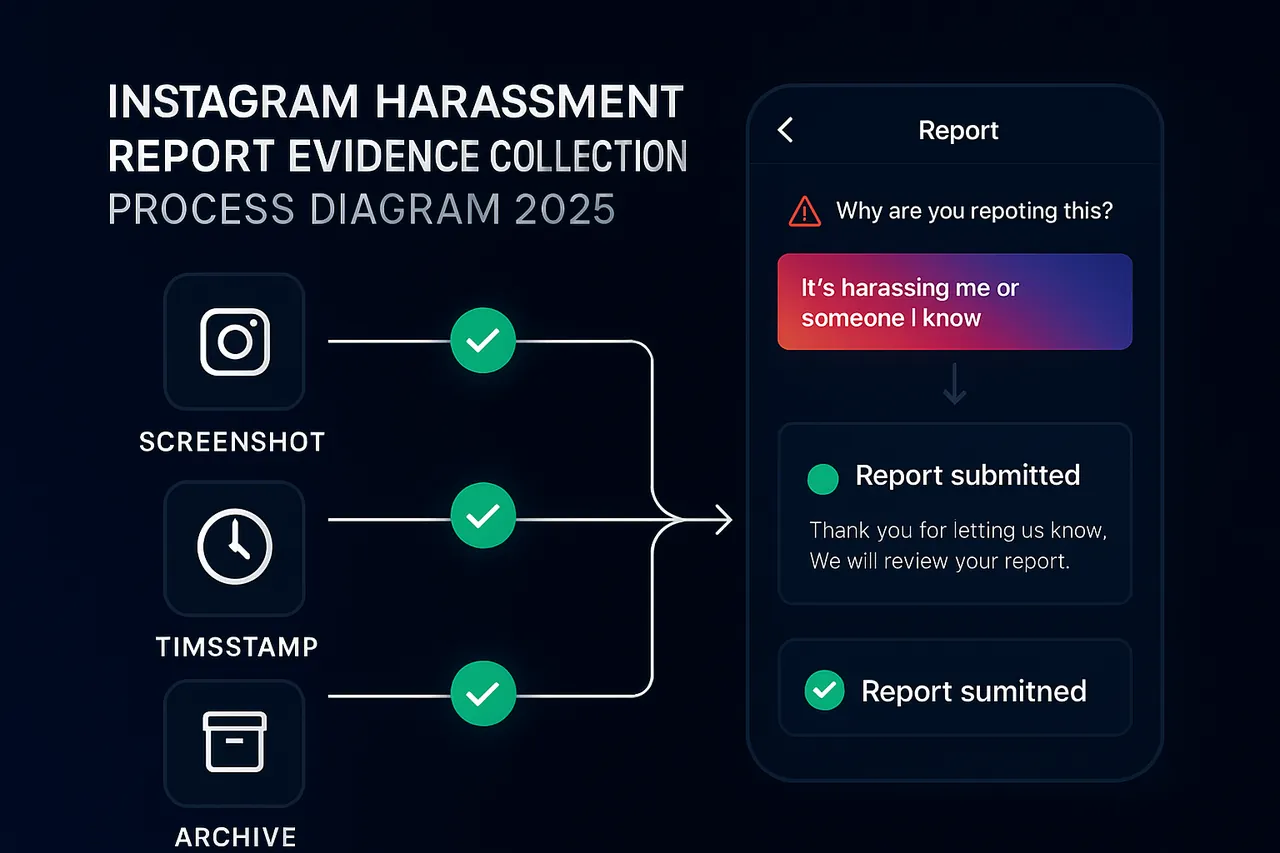
Most "Instagram spam report bot" tools no longer work in 2026, and a lot of them are scams. The reliable route is an evidence-led report through Instagram's official channels — for a single spam bot, that's the in-app Report flow; for an organised wave, it's a documented case with proof attached.
- What is an Instagram spam report bot — and do these tools work?
- Why most 'spam report bot Instagram' services are scams
- What Meta really does with a spam bot Instagram report
- How to report a spam bot on Instagram the right way
- When the case needs a real takedown, not a tap
- Spam report Instagram account bot vs. evidence-led reporting
- EU and US victims: what the law adds
What is an Instagram spam report bot — and do these tools actually work?
An Instagram spam report bot is third-party software, or a paid service, that promises to fire large volumes of spam reports at a single Instagram account so the platform's moderation system removes it. The pitch is always volume: dozens, hundreds, sometimes thousands of identical complaints submitted in a short window to "force" enforcement. In 2026 the pitch and the reality have drifted very far apart.
The market for these tools splits into three groups. Open-source Instagram report bots on GitHub and GitLab — most of them abandoned, all of them in clear breach of Instagram's Terms of Use. Paid services sold on Fiverr, Telegram, and standalone landing pages that promise "92% success rates" against any account you point them at. And confused brand searches that lead people to legitimate analytics products like Porter Metrics, which has nothing to do with reporting other accounts at all.
None of them does what the box says — and one of the categories is openly an abuse vector. We'll go through the evidence below.
'instagram spam reports bot' vs 'spam report instagram bots': different searches, same product class
Search phrasings like instagram spam reports bot and spam report instagram bots all return the same product class — automated mass-reporting tools. Google treats them as one intent, which is why the top ten for each variant is almost identical. That uniformity is itself a useful signal: there is one product category being sold under many names, and it is not a legitimate product category. Both the FAQ and the comparison table below cover the practical implications for buyers.
Why a 'spam report bot Instagram' service is almost always a scam in 2026
A spam report bot Instagram service in 2026 typically falls into one of three categories: outright fraud (you pay, nothing happens), credential harvesting (the "tool" asks for your Instagram login or stores it in a config file), or ineffective automation that Meta's coordinated-reporting filters now discount on sight. In every case the buyer loses — money, account access, or both. The target rarely notices a thing.
This isn't an opinion. The most-shared open-source report spam bot Instagram repository on GitHub still ships with a legal notice from the developer that reads, in plain English, that the tool is illegal to use without Instagram's consent and that the author disclaims responsibility for what users do with it. That notice exists because the author knows the use case is policy-violating; it doesn't make the tool any safer to run.
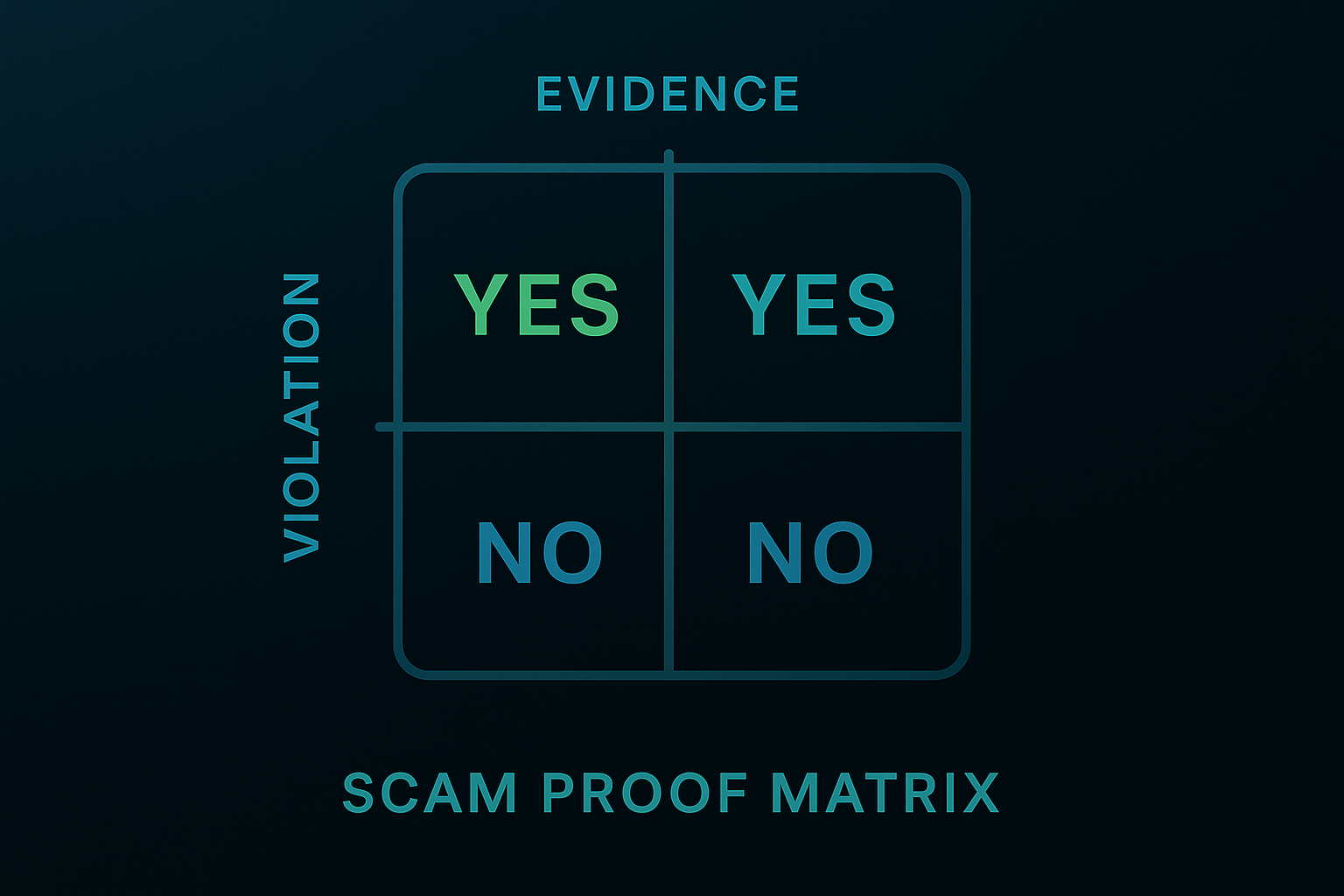
The three patterns every spam report bot vendor falls into
Pattern one: a Telegram, Fiverr, or standalone landing page sells a "report package" — $20 to $500 for "guaranteed" enforcement against any account URL you submit. You pay, you get a confirmation message, and then nothing happens. Refund policies are advertised and almost never honoured.
Pattern two: a free GitHub or self-hosted bot you run yourself. The README asks for your Instagram credentials "for the automation to work." That config file ends up on someone else's server faster than the bot ever loops. You've handed over your account.
Pattern three: a genuine attempt at automation that fires hundreds of identical reports through scripted browser sessions. Meta's anti-abuse systems detect the pattern within minutes. The reporting accounts get flagged, sometimes restricted, sometimes removed — under Meta's own Mass Reporting policy, which we cover next.
What Meta really does with a spam bot Instagram report
A spam bot Instagram report submitted through the official intake first hits an automated triage layer that assigns it to a moderation pipeline based on the violation category, the evidence attached, and the reporting account's history. Genuine, well-categorised complaints route to human review queues. Bot-driven, coordinated waves get flagged by Meta's anti-abuse systems and are discounted — and increasingly, the accounts running them are the ones that get removed.
Meta has named this as policy since 2021. In the company's first Adversarial Threat Report, "Mass Reporting" was introduced as a separate Inauthentic Behavior protocol covering "adversarial networks we find where people work together to mass-report an account or content to get it incorrectly taken down." Subsequent quarterly threat reports have documented removed networks in Vietnam, India, Italy, France, and elsewhere that were operating exactly this way.
An 'instagram spam bot report' that survives Meta's anti-abuse triage
An instagram spam bot report that actually reaches a human reviewer in 2026 has three properties. It cites a specific Community Guidelines clause the target account violates (spam, impersonation, fraud, hate speech, intimate-image abuse). It includes evidence the reviewer can verify in seconds — a screenshot with a visible URL, a video of the offending DM, an archived link. And it comes from a reporting account that itself looks legitimate: real, aged, not part of a recent burst.
One well-prepared report beats a hundred lazy ones. Meta's own transparency reporting shows that automated detection handles the bulk of policy enforcement at scale; user reports succeed when they bring context the automated systems missed. That's exactly the slot a careful, evidence-led complaint fills — and the slot a script-driven bot can never reach.
How to report a spam bot on Instagram the right way
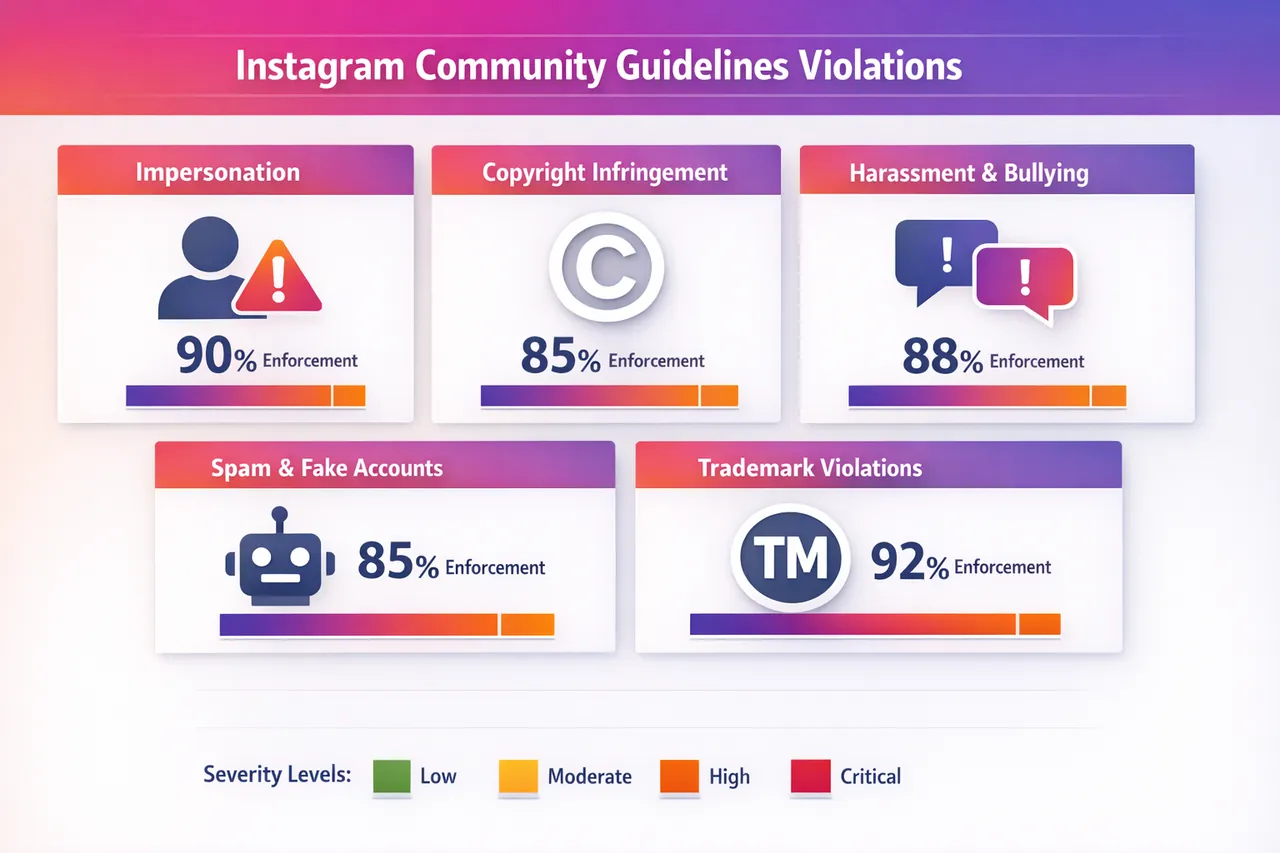
To report a single spam bot on Instagram, open the account's profile, tap the three-dot menu in the top right, choose Report, and pick the category that fits — "It's spam" for promotional or follow-spam, "It's inappropriate" then a sub-category for impersonation, fraud, hate speech, or harassment. The official Help Center page Abuse, Spam and Scams lists the categories with definitions; Report a post or profile documents the in-app flow.
The in-app 'report spam bot instagram' step-by-step
Different people search this differently — report spam bot instagram, report a spam bot on Instagram, spam report instagram bot — and Google returns the same in-app flow for all of them. The steps:
- Open the spam bot's profile in the Instagram app.
- Tap the three-dot menu at the top right of the profile.
- Tap Report.
- Pick the matching category. For follow-spam, mass-tagging, or fake-engagement bots, "It's spam" is correct. For accounts impersonating someone, choose "It's inappropriate" → "Pretending to be someone else." For scam DMs or phishing tags, choose "It's inappropriate" → "Scam or fraud."
- Confirm. Instagram will surface a brief outcome ("Thanks for letting us know") and the report enters the triage queue.
That single tap is the right answer for most spam-bot encounters. Most users don't need anything more sophisticated than that — and a bot service can't do anything more than this for you anyway. What they sometimes can do is give the platform a reason to flag your account instead.
When 'report spam instagram bot' needs the Impersonation or Fraud form instead
The in-app flow handles the common case. But three categories of report spam instagram bot case benefit from going straight to a dedicated Help Center form:
- Impersonation — when the bot is using your name, brand, or photos. Use the official impersonation form; it requires a photo of government-issued ID and resolves more reliably than an in-app tap.
- Trademark / IP theft — if the bot is selling counterfeits or republishing your protected content, the IP report form is the right intake. We cover this in our copyright takedown service page.
- Fraud against you or your audience — phishing pages, fake-shop tags, romance-scam DMs. The in-app "scam or fraud" path works; for cross-border or organised cases, the relevant fraud authority (we cover the EU/US split below) is the more durable next step.
Beyond one tap: when an 'instagram report spam bot' case needs a real takedown
One in-app tap is the right response to a single spam bot tagging or DMing you. But when an instagram report spam bot case scales up — dozens of bot accounts targeting your posts, an impersonator with their own audience scamming your followers, or someone running a fake "spam-report bot" service that is itself spamming your inbox — the right response is a documented case routed through Meta's higher-tier intake rather than the public in-app button.
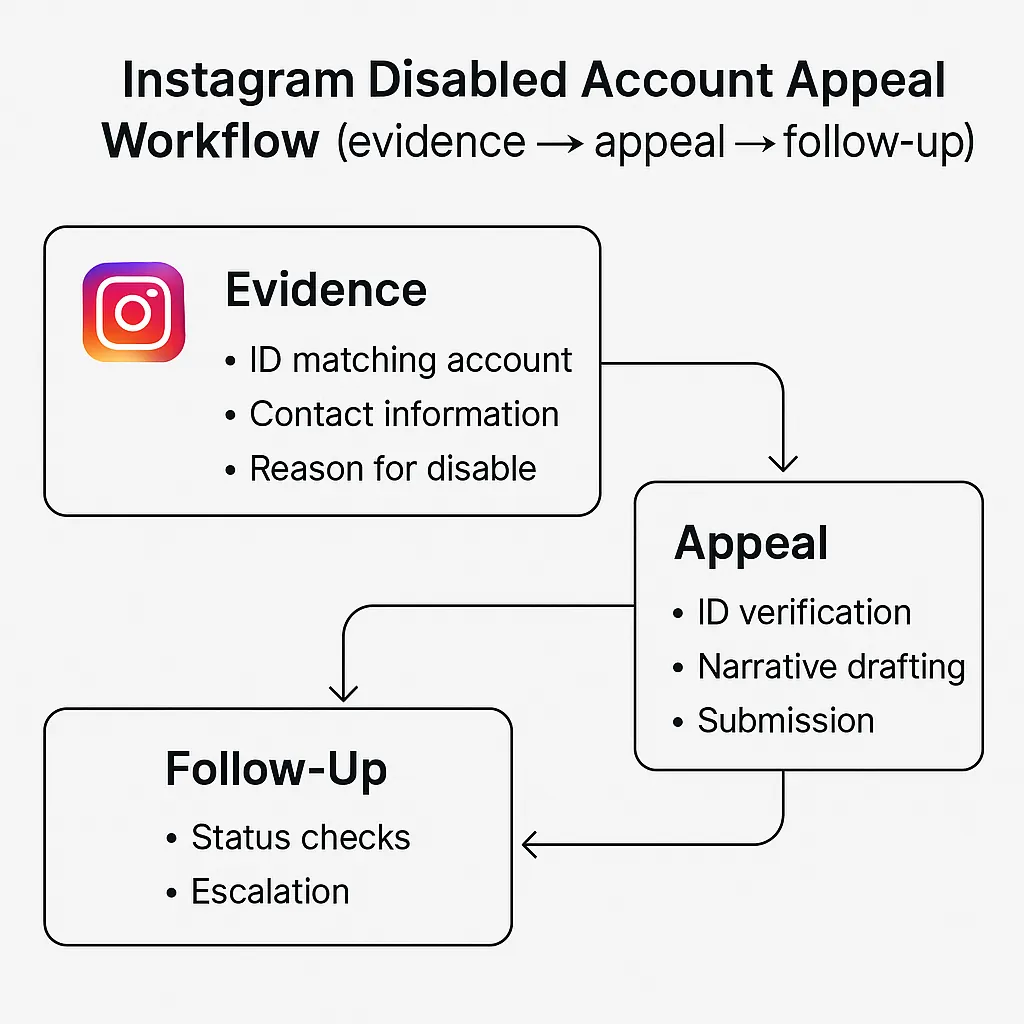
That's where the evidence pack matters. In our recovery and takedown work, the cases that resolve cleanly all share the same anatomy: a written incident timeline, dated screenshots with visible URLs and handles, video captures of any moving content (Stories, Reels), an identity-proof bundle for the legitimate owner, and a clear statement of which Community Guidelines clause is being broken. That bundle is what turns "another report in the queue" into "a reviewer-ready case."
What to do if a 'spam report instagram bot' is being used against you
It's an increasingly common pattern: an account or brand gets hit by a coordinated wave of false reports, sometimes from a paid spam report instagram bot service hired by a competitor or a disgruntled individual. The signal you're being targeted: a sudden spike in restrictions, strikes, or "your content goes against our guidelines" notices on posts that have been live without issue for months.
What to do, in order: stop posting until you've stabilised; save the full text of every Instagram notification you've received (Help Center → Account Status shows current strikes and the underlying decisions); list every account commenting or tagging you in the relevant window; and prepare to file an appeal. In the EU, the Digital Services Act now requires Instagram to give you a "Statement of Reasons" with each enforcement action and a working appeal route — see the regional section below. Account recovery often starts from exactly this point when the reports have already led to a suspension.
Caught in a report-bot wave? Hold off on posting, save every notification you've received, and tell us what's happening — we'll prepare the counter-evidence pack and get the right appeal in front of Instagram.
Spam report Instagram account bot services vs. evidence-led reporting: a comparison
The difference between a spam report Instagram account bot service and evidence-led reporting through official channels is structural, not stylistic. A bot service tries to overwhelm Meta's automated triage with volume; evidence-led reporting works with that triage by giving each report the specifics — URLs, screenshots, exact policy clause, identity proof — that the reviewers need to act. Volume gets discounted; evidence gets escalated. That's why the success curves go in opposite directions.
| Approach | What it does | What Meta sees | Typical outcome | Cost & risk |
|---|---|---|---|---|
| GitHub / self-hosted report bot | Scripted high-volume identical reports | Coordinated pattern → discounted; reporters may be flagged | Nothing actioned; sometimes the reporters' own accounts restricted | $0 + significant account & legal risk |
| Paid "report bot" service (Fiverr, Telegram, Naizop-style sites) | Same as above, behind a paywall | Same as above | Same as above; money usually unrecoverable | $20–$500, refund unlikely |
| In-app spam report (one tap) | Single user report via official UI | Routed through automated triage | Acted on when the violation is clear and the account is new/small | Free, ~30 seconds, no risk |
| Evidence-led report through Help Center form | One high-context report + identity proof + URLs | Routed to human review | High likelihood of action when policy violation is documented | Free (DIY) — main cost is time gathering proof |
| YourBanGuy case service | Same as evidence-led, with case management & escalation | Same as evidence-led | Same — plus tracking, follow-up, and escalation if rejected | Service fee, no account risk, no passwords requested |
For brand-level cases where one bad actor is running ten or fifty fake profiles, the right model is the brand protection program — a continuous monitor that submits each policy-violating profile separately, with proof, instead of a bot blasting one URL with noise. Volume done the wrong way is a liability; volume done the right way is how counterfeit rings actually get cleared.
EU and US victims: what the law actually gives you on top of Instagram
If you're in the EU or the UK, the Digital Services Act entitles you to a working notice-and-action mechanism, a "Statement of Reasons" for any enforcement decision against you, and an internal appeal route — Instagram is a Very Large Online Platform under the DSA and is required to provide all three. National Data Protection Authorities (the Dutch Autoriteit Persoonsgegevens, the UK ICO, and counterparts elsewhere) handle complaints when a bot is publishing your personal data; the GDPR right to erasure (Article 17) gives you a separate route to demand removal of personal data the spam bot is republishing.
If you're in the US, the FTC's reportfraud.ftc.gov takes complaints about scam-bot rings and feeds them into the Consumer Sentinel database that law-enforcement agencies query. The FBI's IC3 is the right channel when a spam-bot scheme is actively defrauding you or your followers. For content theft by a bot, the DMCA notice route is faster than waiting on Instagram's general spam queue — that's what our copyright takedown service handles.
Both routes are stronger than any instagram spam report bot tool because they don't depend on Instagram's discretion alone — they sit beside it, with a regulator or a court in the loop. They also work whether the bot account is hosted on Instagram, Threads, Facebook, or a connected service.
What we will and won't do — and why we never ask for your password
We file evidence-led reports through Instagram's official intake channels for legitimate account owners and genuine victims of online abuse. That includes impersonation takedowns, scam-DM rings targeting a creator's followers, follow-spam and tag-spam waves against a brand, intimate-image abuse, and coordinated bot harassment. Our impersonation removal and scam and fraud reporting services handle the most common variants; for ongoing waves, brand protection covers continuous monitoring.
What we won't do, ever: run a spam report Instagram bot, sell access to one, or take on cases targeting accounts that aren't actually breaking platform rules or the law. We don't run harassment campaigns and we don't take competitor-sabotage work. We will never ask for your Instagram password or your two-factor codes — Instagram's recovery and reporting flows are built around identity verification, not credential handover, and anyone asking for either is running a scam regardless of how professional their landing page looks.
We also don't promise outcomes. Every Instagram decision sits with Meta's own review teams; what we promise is a clean case file, an honest assessment up front, and a real person you can talk to. For account recovery questions specifically, see our companion guide on how to recover a hacked Instagram account. For the platform-level mechanics of the broader topic this post lives within, see our coverage of mass reporting on Instagram and the cross-platform comparison in our Twitter / X mass report bot guide.
Frequently asked questions
Will an Instagram spam report bot actually get an account banned?
No, almost never in 2026. Meta's anti-coordinated-reporting systems flag bot-driven report waves and discount them before they reach human reviewers. A 'spam report instagram bots' campaign now triggers the same Inauthentic Behavior policy that gets the reporters removed — exactly the opposite outcome you paid for. The only reports that consistently move cases are evidence-led ones submitted through Instagram's own channels.
Are 'spam report bot Instagram' services against Instagram's terms?
Yes — twice over. Instagram's Terms of Use prohibit unauthorised automation and any attempt to access or interfere with the service through unofficial tools. Using a 'spam report bot Instagram' service typically also breaches Meta's Inauthentic Behavior policy on Mass Reporting. The risk lands on the buyer's account, not the target's.
Can I just download a free Instagram report spam bot from GitHub?
It's a bad idea. Even the most popular open-source 'Instagram report spam bot' repos carry a legal notice from the developer warning the tool is effectively illegal to use without Instagram's consent. They are also often abandoned, contain credential-harvesting code paths, or get patched out within days. You take all the risk for outcomes that almost never arrive.
Is mass-reporting an Instagram account legal?
Coordinated mass-reporting against lawful accounts to silence them is a Meta policy violation (Inauthentic Behavior → Mass Reporting) and, in some EU jurisdictions, may also be unlawful harassment under national laws. Filing many evidence-backed reports against a single, genuinely-violating account is different — and it is the legitimate route when, for example, one impersonator runs many fake profiles.
What if someone is using a spam report Instagram bots service against me?
If your account is being targeted by a 'spam report instagram bots' campaign, document everything — every notice you receive from Instagram, every account that's tagging or commenting on you, the exact dates. In the EU, the Digital Services Act requires Instagram to provide a Statement of Reasons and an appeal route. Contact us and we'll prepare the counter-evidence pack.
How long does Instagram take to act on a legitimate spam bot Instagram report?
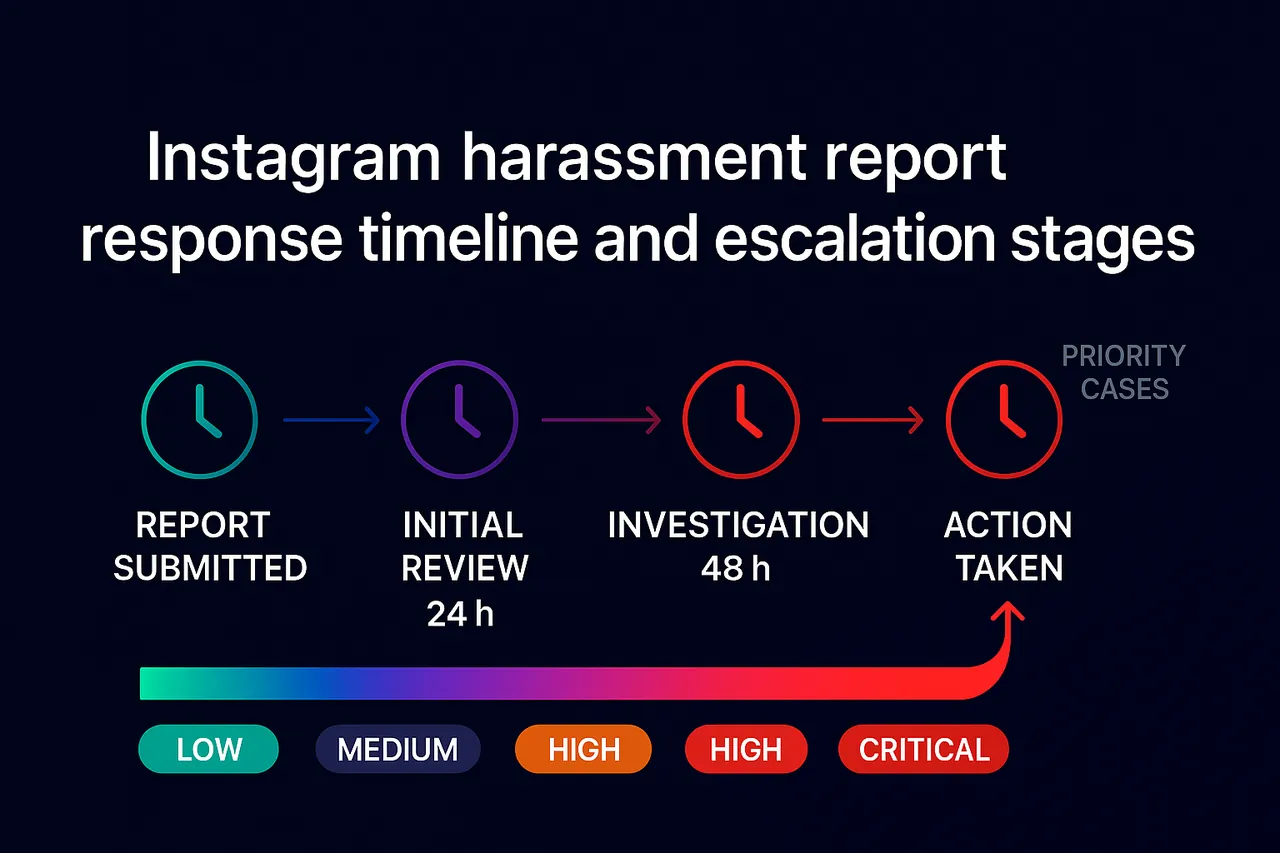
It varies by category. A clean in-app spam bot Instagram report on a single account typically actions in 24–72 hours when the violation is obvious — scam phishing tags, follower-spam DMs, brand impersonation. Cases requiring identity verification (impersonation, intimate-image abuse) can take 5–14 days. Complex coordinated cases take longer.
Will YourBanGuy provide a spam report Instagram bot for my case?
No. We don't operate or sell any 'spam report instagram bot' tooling — every report we file goes through Instagram's own official intake, signed by a real reviewer on our team, with documented evidence. That's both an ethics line and a results line: it's the only approach that consistently moves cases in 2026.
What's the difference between 'report spam bot instagram' and 'report spam instagram bot'?
They describe the same action — using Instagram's in-app three-dot Report flow on a bot account. Different phrasings — 'report spam bot instagram', 'report spam instagram bot' — return the same SERP because Google treats them as one intent. Picking the right report category (spam vs impersonation vs fraud) matters far more than the wording.