How to get someone banned on Twitter/X
How to get someone banned on Twitter or X in 2026: you cannot ban anyone yourself — only X's Trust and Safety team can. Your job is to map the behaviour to a specific X Rule, gather clean evidence, and file through the right form. Honest, well-evidenced reports work; mass-report panels mostly fail and put your own account at risk.
Need someone banned on Twitter right now?
Send us the handle and what they have been doing — we will tell you honestly whether X is likely to action it, and run the report through the right form for you.
We never ask for passwords · Legitimate owners & genuine victims only · No guaranteed outcomes
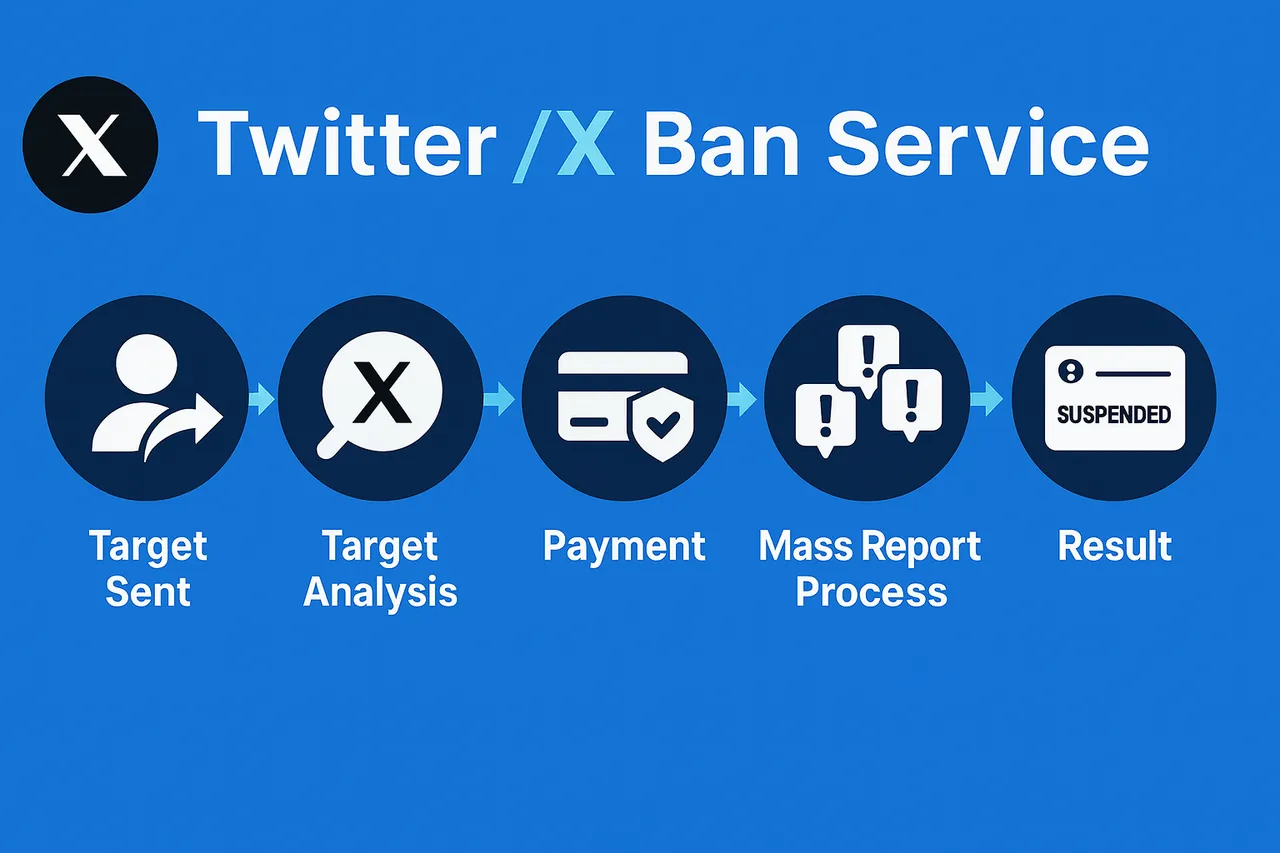
Nobody outside X can ban a Twitter account. To get someone banned on Twitter you map their behaviour to a specific X Rule, save the evidence, and file through the form built for that category — in-app for general abuse, or one of X's dedicated forms for impersonation, NCII, copyright, or trademark. Volume of reports does not move the queue; evidence does.
- What X actually acts on in 2026
- The violations X will (and won't) action
- How to get someone banned from Twitter through the official report flow
- How to get someone's Twitter account banned via the dedicated forms
- How to get someone banned on X faster — what actually accelerates a case
- Why mass-report panels and bots backfire on X
- If someone is trying to get YOUR Twitter banned
- When to escalate beyond X — DSA, FTC, IC3
- What we will and won't do
How to get someone banned on Twitter — what X actually acts on in 2026
X (formerly Twitter) acts on accounts when an account engages in repeated violations of policy or violates a rule severe enough to cause significant risk — illegal content, platform manipulation, incitement to violence, fraud, targeted harassment, threats, and non-consensual intimate imagery. Anything else the platform calls "negative" content tends to be down-ranked, not removed, under its current "Freedom of Speech, Not Reach" enforcement philosophy.
That distinction is the single most important thing to internalise before you file. A post you find offensive but that breaks no specific rule will almost never produce a suspension. A post that names a person, threatens them, and is repeated across an account's timeline will. The reviewer is matching what you sent to a numbered policy, not weighing how upset you sound.
The numbers explain why reports get lost. X received 224 million user reports in the first half of 2024 and suspended around 5.3 million accounts in that window according to X's own transparency report. Roughly two-thirds of reports concluded in no action. A clean, category-correct, evidence-led report skips that triage pile; a generic "this person is annoying" report dies in it.
The violations X will (and won't) action
Before you file, sort the conduct into the X Rule it most cleanly breaks. The platform's Safety section of the X Rules defines the categories that lead to account-level suspension. Mismatched categories are the leading cause of "no action taken" emails — even a real violation reported under the wrong rule looks unsubstantiated to the reviewer.
| Category | X Rule it matches | Will X action it? |
|---|---|---|
| Account impersonating you, your brand, or a public figure | Authenticity → Impersonation | Yes — dedicated form, fastest path |
| Credible threats of violence, doxxing, calls to harm | Violent Speech / Private Information | Yes — frequently fast for clear cases |
| Non-consensual intimate or sexual imagery (real or AI-generated) | Non-Consensual Nudity | Yes — within 24 hours for valid reports |
| Stolen content, copied photos, infringing videos | Copyright (DMCA) / Trademark | Yes — separate specialised forms |
| Bot networks, spam replies, fake engagement | Platform Manipulation & Spam | Yes — works best when you map the cluster |
| Crypto scams, fake giveaways, wallet drainers | Financial Scams / Platform Manipulation | Yes — paired with the scam pattern |
| Hateful conduct targeting a protected characteristic | Hateful Conduct | Yes for clear cases; visibility restriction is now more common than suspension |
| Opinions you disagree with, dunks, criticism | None | No — protected speech, no rule to apply |
| Sub-tweets and parody (clearly labelled) | None — parody is permitted with the "Parody, Commentary, Fan" label | No, unless the label is missing or misused |
That last row is worth pausing on. X tightened its parody-label rule in 2025, requiring accounts that parody real people or brands to carry the "Parody, Commentary, Fan" (PCF) label and to use a clearly distinct profile and handle. A parody account that follows the rule will not be suspended for parody. One that copies the original handle, photo, and bio without the PCF label is reportable as impersonation — and that route works.
How to get someone banned from Twitter through the official report flow
The fastest legitimate path to get someone banned from Twitter is the in-app report flow filed against the right behaviour, plus the dedicated form for specialised categories. Both routes go to the same Trust and Safety pipeline, but the dedicated forms reach a specialist team and accept richer evidence — so cases that fit those forms move faster.
For general abuse, here is the operator sequence we use on live cases:
- Archive the evidence first. Save the offending post URLs (not screenshots — X needs the URL). Capture the full handle, display name, and the timestamp visible in the URL. Use a service like archive.today before the post can be deleted. For a pattern of abuse, gather three to five examples, not one.
- Click the ⋯ menu on the post or profile → Report post or Report @username.
- Pick the precise category. "It's abusive or harmful" → then the specific sub-type (targeted harassment, violent threats, hateful conduct, sharing private info, etc.). The category controls which queue the report enters.
- Add context in the description. Plain English. One paragraph. Name the rule, link the worst posts, state the harm. No emotional appeal.
- Report a few representative posts, not all of them. Three to five well-chosen tweets demonstrate a pattern. A flood from one account looks like report-spamming.
- Note the report ID in X's email confirmation. You need it if the case is closed and you want to refile or appeal.
If you have an account at risk yourself, our Twitter account takedown guide covers the structured packet approach we use for harder cases.
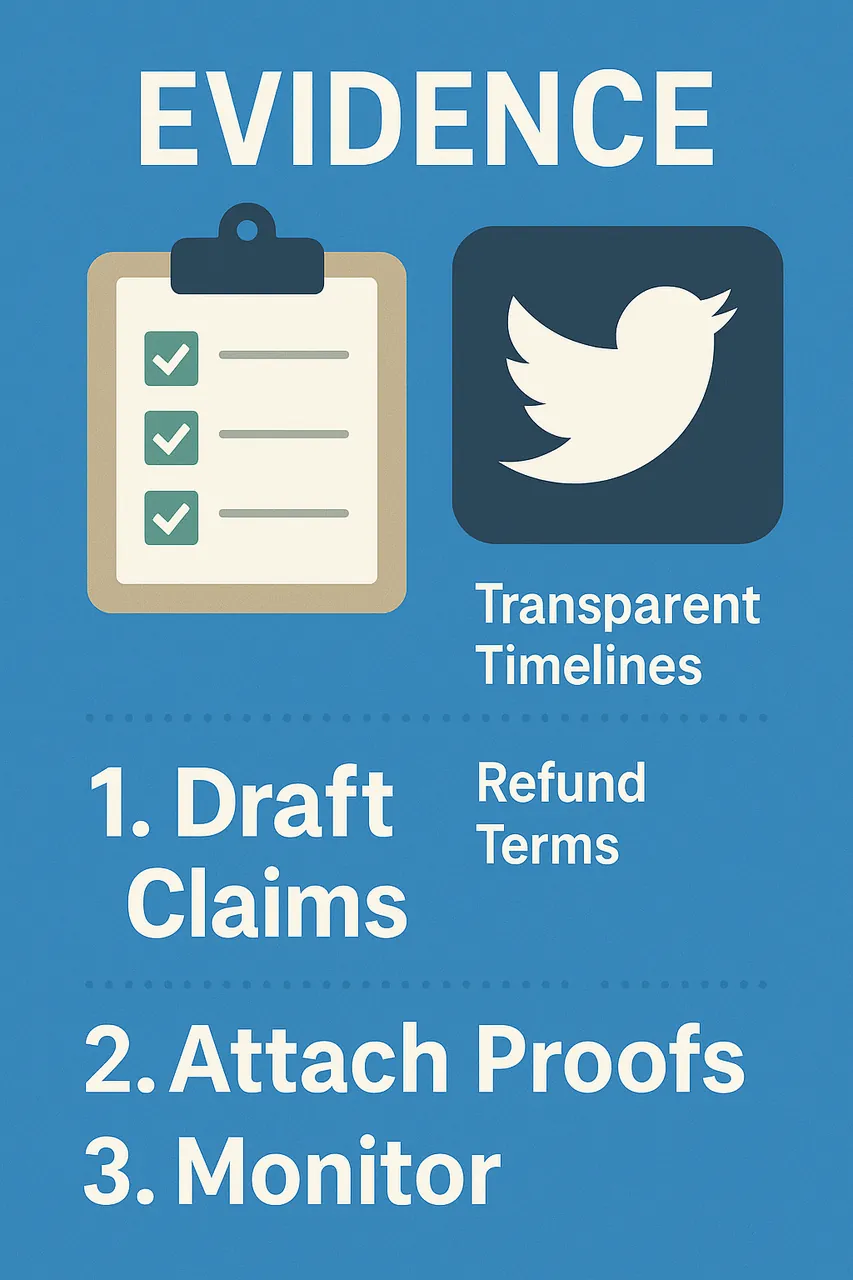
How to get someone's Twitter account banned via the dedicated forms
For four categories — impersonation, NCII, copyright, and trademark — the in-app Report button is the wrong route. X runs standalone forms that reach specialist teams, accept ID and proof attachments, and produce decisions far faster than the general queue. If you want to know how to get someone's Twitter account banned for one of these, this is the route that actually works in 2026:
- Impersonation — file at help.x.com/en/forms/authenticity/impersonation. You do not need an X account to file. Attach a government ID matching the real identity, the impersonating handle, side-by-side screenshots, and one line stating you are the person (or authorised representative). Clear cases close in 24–72 hours; ambiguous ones in five to seven business days.
- Non-consensual intimate imagery (NCII) — use the dedicated NCII form linked from the X Help Center. You do not need to share the image with X. The post URL plus a statement of non-consent is enough. X commits to removing valid NCII reports within 24 hours. For prevention, victims can also hash their images via StopNCII.org so partner platforms (including Meta and Microsoft) block re-uploads automatically.
- Copyright (DMCA) — file via the X DMCA form. Include a description of your original work, the infringing URL, your contact details, and the perjury statement required under 17 U.S.C. § 512(c)(3). Note: DMCA is the one route where the reporter's identity is shared if the other side files a counter-notice — by design.
- Trademark — file via X's trademark report form with your registration number, the offending handle, and proof of brand confusion (matching logo or name, customer screenshots, fake "support" replies). Trademark reports skip the general abuse queue entirely.
For impersonation that spans more than just X, our impersonation removal service coordinates the same package across every platform the fake is also using — usually Instagram, TikTok, and a payment processor at the same time.
How to get someone banned on X faster — what actually accelerates a case
How to get someone banned on X faster comes down to three signals X's pipeline measures: the report's category accuracy, the evidence's specificity, and whether you have triggered a parallel legal pathway. Volume is not on the list. Reports stuffed into the wrong category move slower, not faster, because they bounce through queues.
Six accelerators we see actually working on live cases in 2026:
- Map to the closest rule, not the angriest one. A scam-handle posing as a brand is impersonation first, financial fraud second. Lead with impersonation.
- Use the dedicated form if one exists. Impersonation, NCII, copyright, and trademark each move 3–10× faster off the general queue.
- Attach the numeric user ID, not just the handle. Display names and handles can change; the user ID is permanent and lets X track the same account across rebrands.
- Report a pattern, not an incident. Three to five archived URLs across different days beats one screenshot of the worst tweet.
- Stop after one report. Duplicate reports from the same reporter do not stack; they flag as misuse.
- Run a parallel legal path for serious cases — police report number for threats, DMCA for stolen content, DSA escalation in the EU. Reports that come with an active legal case are routinely prioritised.
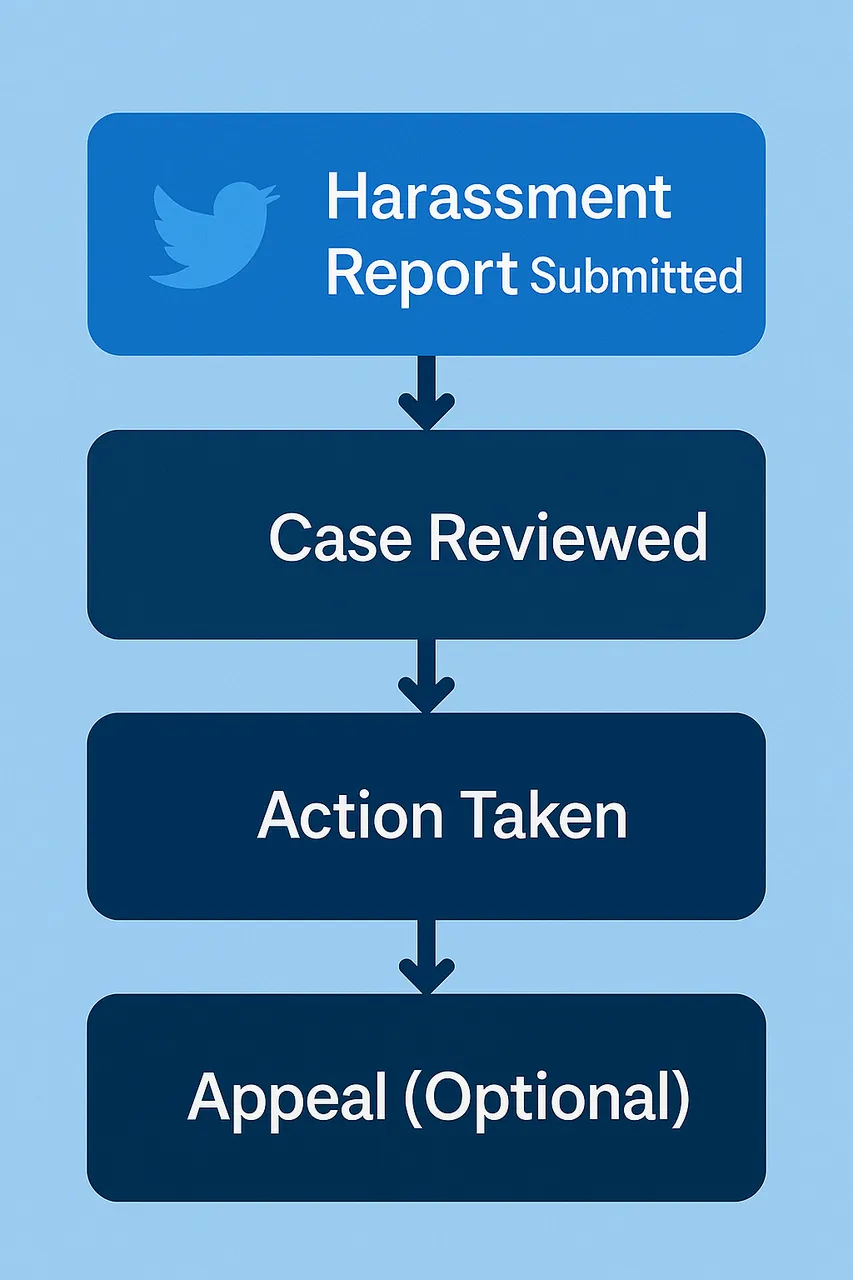
Why "mass report Twitter" panels and bots backfire on X in 2026
If you have searched for how to get someones twitter banned, you have seen the panels: Telegram bots, SMM dashboards, $5 Fiverr gigs, GitHub Selenium scripts that promise to fire hundreds of reports at one handle. They occupy two-thirds of the top SERP for these keywords. Almost all of them are scams or actively harmful to the buyer. The reason is in X's own policy.
X publishes a Misuse of Reporting Features Policy that names exactly this behaviour and treats it as platform manipulation. The relevant language: "coordinating and/or encouraging others to misuse X reporting features in order to harass others under false pretenses or hope to cause their account(s) or post(s) to be limited or removed." Severe violations — including "using automation to submit large numbers of reports without the express written consent of X" — can result in permanent suspension of the reporter's own account.
What that means in practice:
- Most paid bot panels never file anything. They show a counter ticking up, nothing happens on X, and they keep the fee. The dashboard is the product.
- Bots that do file get rate-limited fast. X has deployed device fingerprinting, Arkose CAPTCHA challenges on suspicious sessions, and IP-level limits. Free GitHub scripts crash inside ten reports and frequently get the operator's own account locked.
- Even successful bulk reports are discounted, not actioned. X's pipeline scores reporter credibility, not volume. A hundred reports from new, low-credibility accounts have less weight than one well-evidenced report from an established account.
- Coordinated brigades trip the same policy. Asking your followers to all report one user pattern-matches to the misuse policy and gets the campaign discounted or reversed.
Already paid for a "mass report" panel and nothing happened? You are not alone — most of these never fire a real report. We unpack the bot economy in detail here and explain the route X actually reviews.
If someone is trying to get YOUR Twitter banned — the defence playbook
The other side of this topic is the one nobody else writes about: what to do when a coordinated group is using the same tactics against your account. Searching how to get someone's twitter banned brings up the offence; you also need the defence. This is the move-by-move we run for clients whose accounts are being mass-reported, often after a politically charged post, a viral take, or a creator becoming visible enough to attract a brigade.
- Don't delete anything in panic. Removing posts in the middle of a campaign looks like an admission. Wait until you have screenshotted them in their original context.
- Document the campaign. Screenshot any public posts coordinating the reports — Telegram channels, Discord servers, X threads saying "everyone report @yourhandle." Save URLs and timestamps. Archive them via archive.today.
- Report the coordination, not the individual reporters. File one report against the coordination post or channel under Platform Manipulation with the Misuse of Reporting Features Policy named in the description.
- If your account gets locked or restricted, do not create a new account — that breaks X's ban-evasion policy, which links the new account to the original through device, contact, and behavioural signals and warns that evasion "will result in permanent suspension at first detection." File the official appeal from the original handle.
- Include the campaign evidence in your appeal. Reviewers reverse coordinated-takedown suspensions when the appeal shows the campaign was the cause of the report volume, not a genuine violation.
- In the EU, escalate via the DSA. Article 16 of the Digital Services Act requires X to provide a clear, fast notice-and-action mechanism, and Article 20 gives you an internal complaint right against any moderation decision. If X refuses, your national Digital Services Coordinator (BNetzA in Germany, ARCOM in France, AGCOM in Italy, Coimisiún na Meán in Ireland, the CNMC in Spain) can be petitioned.
When to escalate beyond X — DSA, FTC, IC3, law enforcement
Some conduct is too serious or too persistent for X's standard pipeline alone. In those cases the right answer is a parallel filing — a legal channel that puts pressure on the platform from outside while the in-app report works its way through. The four routes that actually move the needle in 2026:
- United States — FTC and IC3. For scams (crypto, romance, sextortion), file with the Federal Trade Commission and the FBI's Internet Crime Complaint Center (IC3). Include the IC3 case number in your X report — files with active law enforcement involvement are frequently prioritised.
- United States — DMCA. For stolen content, file the formal DMCA notice. Counter-notices expose the infringer's identity; many quietly retreat at this stage.
- European Union — DSA. The Digital Services Act gives EU residents the right to flag illegal content via Article 16 and to appeal moderation decisions via Article 20. The European Commission has already fined X €120 million in December 2025 under the DSA, so the platform is actively responsive to formal DSA-channelled complaints.
- NCII — police plus StopNCII. Always file a police report; image-based sexual abuse is criminal in most US states and across the EU and UK. Hash your images on StopNCII.org so any reupload across partner platforms (Meta, Microsoft, TikTok, Bumble) is automatically blocked.
For sustained image-abuse cases we coordinate the X report, the StopNCII hash, and the law-enforcement filing in parallel through our intimate image removal service. The platform routes do not work in isolation for serious cases.
What we will and won't do
Honest scope, because this topic attracts the wrong kind of inquiry. We work as a Twitter account takedown specialist for one category of case: a real X Rule has been broken by an account that is targeting our client, and the client wants the case packaged and filed correctly. Beyond that, we say no.
- We will work cases involving impersonation of you, your business, or a client; sustained harassment with documented threats; NCII; scams or counterfeits using your name or IP; or stolen content with proof of ownership.
- We will not run brigades against lawful accounts, target critics or journalists, accept "competitor sabotage" briefs, attempt to ban someone simply for disagreeing with our client, or operate any kind of automated mass-reporting infrastructure — X's Misuse of Reporting Features Policy treats that as platform manipulation, and so do we.
- We never ask for your password. Anyone offering a Twitter ban service who asks for your login credentials is running a phishing operation; close the chat.
- We never guarantee an outcome. Only X decides whether to action a report. We can give you an honest read on whether your case is likely to move and prepare the strongest version of the filing, but that is where any legitimate operator's promise ends.
Rough operator reality: roughly one in three cases that contact us turns into an active file, because the rest do not map cleanly to any X Rule. That is the part nobody else in this market will tell you, and it is why most of the SERP for these keywords is occupied by sales pages, not honest guides. For broader background on how the sibling platforms work, see our companion guides on how to get someone banned on Instagram and how to get someone banned on TikTok.
Frequently asked questions
Can you really get someone banned on Twitter?
You cannot ban anyone yourself. Only X's Trust and Safety team can suspend a Twitter account, and they only do it when an account actually violates the X Rules or applicable law. What you can do is map the behaviour to a specific rule, gather clean evidence, and file through the right form — that is the honest answer to how to get someone banned on Twitter.
How to get someone banned on Twitter immediately — does that work in 2026?
Immediate suspension only happens when X's automated systems instantly match the content — typically child-safety material, credible threats of violence, or large-scale spam manipulation. For everything else, even a clean report takes hours to weeks. X says it acknowledges a properly filed report within 24 hours; most cases resolve in days but some take up to 30.
How to get someones twitter account banned without getting your own account in trouble?
File one careful report through the channel that fits the violation, then stop. X's Misuse of Reporting Features Policy treats bulk, coordinated, or false reports as platform manipulation and can suspend the reporter's own account, especially when automation is involved. One well-evidenced report on a real breach outweighs fifty copies that all say the same thing.
How long does it take to get someone's Twitter banned?
X commits to acknowledging a properly filed report within 24 hours. Genuine violations of automated-detection rules (child safety, credible threats, large-scale spam) can be actioned in minutes. Impersonation, NCII, and copyright cases that need human review usually take three to seven business days; complex appeals can run to thirty. Silence after that window usually means no action was taken.
How to get someone banned on X using the impersonation form?
Open the dedicated form at help.x.com/en/forms/authenticity/impersonation, attach a government ID matching the real identity, the impersonating account's URL, side-by-side screenshots, and one line stating you are the person being copied or an authorised representative. The trademark and copyright forms work the same way and reach a specialised team faster than the in-app Report button.
How to get someones twitter banned with mass reporting — does it actually work in 2026?
No. X explicitly discounts coordinated and high-volume reports under its Misuse of Reporting Features Policy. A documented cluster of bot accounts reported under platform manipulation can move; a hundred people sending the same complaint about one user usually fails and risks the reporters' accounts. Evidence quality outweighs report volume on every category X reviews.
Can someone see if you reported them on Twitter?
No. X keeps the reporter's identity confidential and does not notify the reported account. The reported user only sees that content was flagged, not who flagged it. The single exception is a DMCA copyright complaint — the counter-notice procedure deliberately exposes the rights-holder's contact details, because US copyright law requires it for any potential legal follow-up.
What if someone is trying to get my Twitter banned with false reports?
Document everything before responding. Screenshot the harassment campaign, archive any coordinated posts targeting you, and report the participating accounts under X's Misuse of Reporting Features Policy and the platform-manipulation rule. If your account is wrongly suspended, file the official appeal from a logged-in browser and include the campaign evidence. EU users can also escalate via their national Digital Services Coordinator under the DSA.