How to get someone banned on TikTok
To get someone banned on TikTok in 2026, you need to file evidence-based reports against accounts that actually violate the Community Guidelines — impersonation, harassment, scams, NCII, or IP theft. TikTok's strike system, not report volume, drives bans, and coordinated mass-reporting is now flagged as platform abuse.
Someone harassing or impersonating you on TikTok?
Send us the profile link and what's happening — we'll prepare an evidence-led report through TikTok's official channels.
We never ask for passwords · Legitimate owners & genuine victims only · No guaranteed outcomes
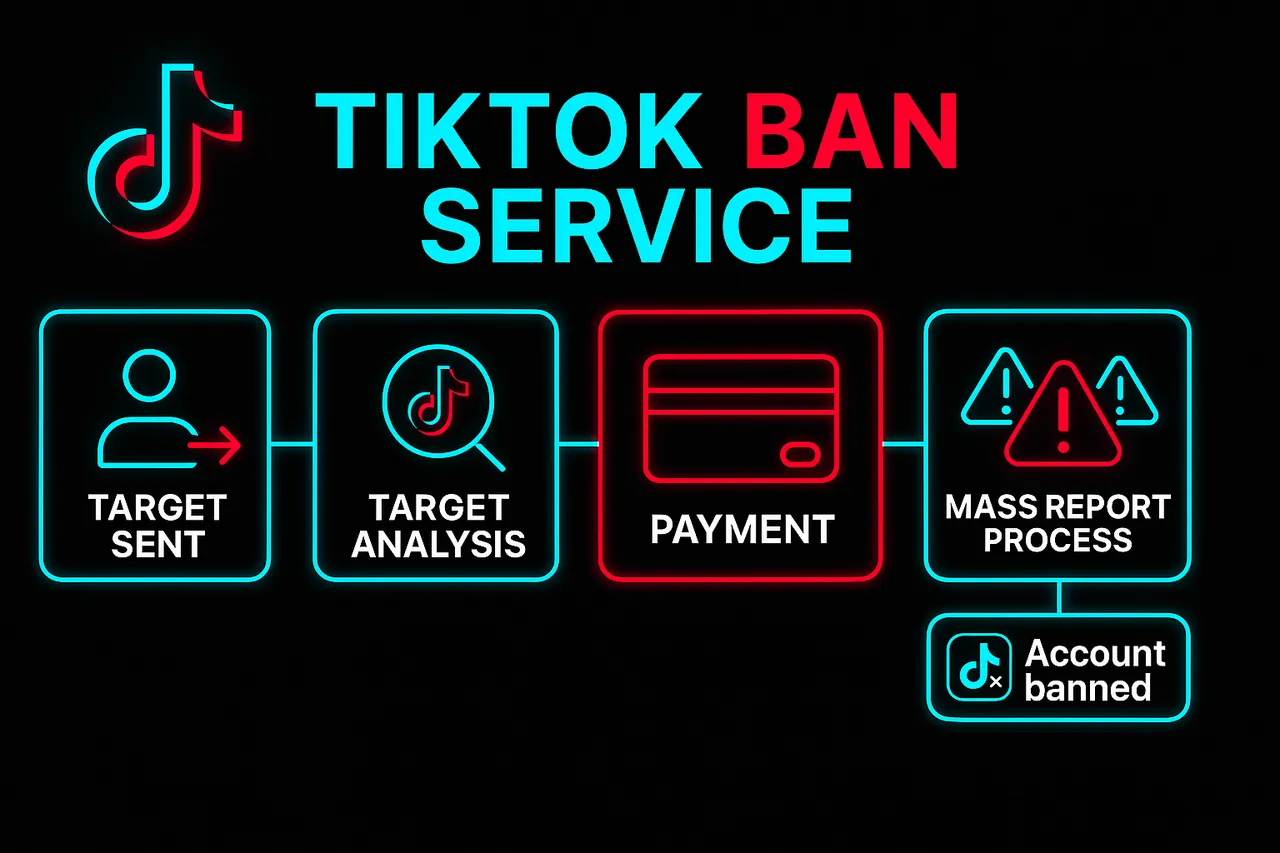
You can't "ban" someone on TikTok yourself — TikTok bans accounts for verifiable Community Guidelines violations. Your job is to file a clean, specific report and supply the evidence. Volume of reports doesn't matter; quality and accuracy do.
- Can you actually get someone banned on TikTok?
- What gets a TikTok account permanently banned
- How to get someone's TikTok account banned the right way
- The fastest paths to a TikTok ban
- How to get someone banned on TikTok Live
- Why mass-report bots and panels don't work in 2026
- How to get someone permanently banned on TikTok
- What people get wrong on Reddit
- When to bring in a recovery and takedown team
Can you actually get someone banned on TikTok?
No individual user can ban another TikTok account — only TikTok's Trust & Safety team can. What you can do is report a real Community Guidelines violation with documented evidence, and TikTok's strike system or zero-tolerance review may then remove the account. Without a genuine violation, no number of reports will work.
TikTok's enforcement system is automated first: content goes through machine review on upload, and human moderators step in when content gains popularity or is reported. The platform processes billions of reports a year and runs at a 98.2% proactive removal rate, which means most violations are caught before users even hit "Report" (TikTok Transparency Reports, 2024).
Practically, that has two consequences for anyone trying to get a TikTok account taken down. First, your report has to match an actual policy — vague reports of "this is inappropriate" almost never succeed. Second, the strike system rewards specificity and severity over volume; one well-documented report under the correct category beats fifty generic ones.
What gets a TikTok account permanently banned?
TikTok permanently bans accounts that hit a category strike threshold within 90 days, or that commit a single severe violation. Severe categories — CSAM, real-world violence, NCII, human trafficking, depicting torture — trigger immediate removal. Other permanent triggers include deceptive impersonation, ban evasion, repeat IP infringement, and accounts that exist solely to violate rules.
The platform's published triggers for a permanent ban, taken from TikTok's official safety pages, are:
- The account does not meet the minimum age (13) or other Terms-of-Service requirements.
- The account impersonates another person or entity in a deceptive manner.
- Severe content violations: CSAM, promoting or threatening violence, depicting non-consensual sex acts, facilitating human trafficking, depicting real-world torture.
- Creating a new TikTok account to evade restrictions on another (ban evasion).
- The account hits the strike threshold for a policy area or feature within 90 days.
- Multiple violations of TikTok's Intellectual Property Policy.
- The account exists solely to violate the rules.
Two things worth knowing as of 2026: strike weight varies by policy area — TikTok places greater weight on hateful-ideologies violations than on spam — and strikes expire after 90 days, so old violations stop counting toward a permanent ban. That window matters when you're documenting repeat behaviour: pulling together evidence inside the 90-day cycle is what tips a borderline case over the threshold.
If you've been searching how to get someones tiktok banned, how to get someone tiktok banned, or any close variant of how to get someone banned from tiktok, the answer hinges on this list. Without a triggered category above, no report will move the account — and that's true whether you phrase it as how to get someone's account banned on tiktok or how to get someone account banned on tiktok.
How to get someone's TikTok account banned the right way
To get someone's TikTok account banned legitimately, identify the specific guideline they're breaking, capture screenshot evidence with timestamps, file an in-app report under the exact violation category, and — for impersonation, IP, or NCII — also submit the specialised official form. The cleaner the evidence pack, the faster TikTok reviews.
Here is the workflow we use on live cases. It mirrors how TikTok's Trust & Safety team wants a case presented, which is why it outperforms the "ask 50 friends to report" approach.
- Identify the exact guideline broken. Pick the specific category — impersonation, harassment, hate speech, spam, IP infringement, minor safety, dangerous acts. Reports filed as "Other" are deprioritised.
- Build a clean evidence pack. Capture the profile URL, two or three offending video URLs, dated screenshots showing the violation, the username, and any DMs or comments that demonstrate intent. Save everything before reporting — accounts often delete content the moment they realise they've been flagged.
- File the in-app report. On the offending video, tap Share → Report → pick the category and add a short, factual description that names the policy. On the profile, tap the three dots → Report → Report account, again under the right category.
- File the specialised form in parallel. For impersonation, use the official impersonation report form with ID verification — the same identity-verification pattern that account-recovery cases use. For copyright or trademark misuse, use TikTok's IP forms at
tiktok.com/legal/report/copyrightandtiktok.com/legal/report/trademark. For NCII, route through StopNCII.org hash-matching as well as TikTok's NCII reporting. - Block the account. Blocking prevents future interaction while leaving your report active. It also stops the target from screenshotting your profile in retaliation.
One specific habit that lifts results: write the report description in two sentences, not one paragraph. Sentence one names the policy ("This account violates the Impersonation policy by using my legal name and photo"). Sentence two cites the evidence ("Screenshots, side-by-side profile comparison, and government ID attached"). Moderators triage faster when the category is undisputed at first glance.
The evidence pack we hand to TikTok, by case type
What "clean evidence" looks like varies by what's actually happening. The minimum we'd send for each common case type:
- Impersonation: profile URL of the fake; side-by-side screenshots of your real account vs. the fake; a government-issued photo ID (passport or driver's licence, personal details blurred except name and photo); proof the real account is older (creation date, follower history, prior content); two examples of the fake account interacting with users as if it were you. Our impersonation-removal page covers the full intake.
- Harassment / hate speech: dated screenshots showing the target account's pattern across multiple posts/comments; the policy section being broken (e.g. "Safety & Civility - Hateful behaviour"); any DMs or replies aimed at you; a short note on the harm done (reach, audience overlap, follow-up incidents).
- Scam / fraud: profile URL; screenshots of the scam pitch (fake giveaways, crypto returns, "investment" DMs); the off-platform URL the scam funnels to (and whether it's a known phishing or fake-shop domain); transaction screenshots if money was lost. Cross-file with IC3 in the US or the FTC, and your national cybercrime unit in the EU. Our scam & fraud reporting page details the cross-filing pattern.
- NCII: never send the images. Use the StopNCII.org hash tool to generate a hash of the image from your own device; submit the hash to TikTok's NCII pathway. Tell us what's happened in general terms and we'll guide the rest. The intimate-image-removal service handles these privately.
- Copyright / trademark: the original work (publication date, ownership proof); the infringing TikTok URL(s); for trademark, your registration number, jurisdiction, and certificate. Tick the box that asks TikTok to prevent future re-uploads of the same video — its content-matching system can block exact re-posts. More on copyright takedowns here.
The fastest paths to a TikTok ban
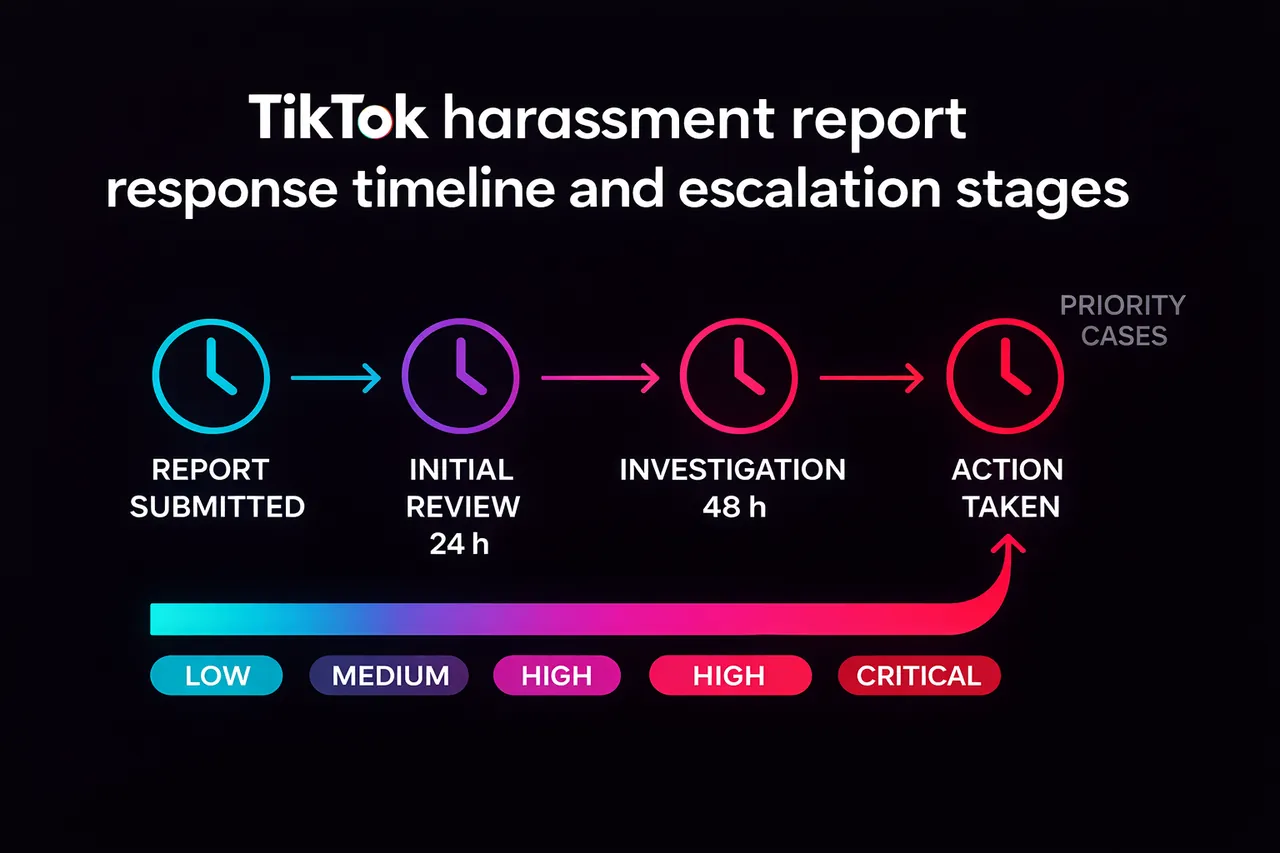
Severe violations are the fastest path to a TikTok ban — CSAM, credible violence threats, NCII, and terrorism reports trigger priority review within hours, sometimes leading to immediate permanent removal. Standard policy reports (harassment, hate speech, spam) move on a 24–72-hour cycle. Speed depends on severity and evidence quality, not report volume.
If you're searching how to get someone banned on TikTok fast, the honest filter is: is this a severe-category violation, or a standard one? Severe-category cases skip the strike system entirely. Standard cases ride the strike clock — which can take weeks if the account had no prior strikes.
Three honest accelerators if the violation is real:
- Pick the highest-tier category that genuinely applies. Don't inflate ("hate speech" when the issue is spam) — that gets the report rejected. But if hate speech and harassment both fit, file under hate speech: it carries more strike weight.
- Use the specialised form, not just the in-app report. Impersonation, IP, and NCII forms route directly to the relevant specialist team, with ID verification, and skip the generic queue.
- Report the active video and the account. An account report alone often fails if no individual post is flagged. A video report alone removes one video but leaves the account intact. Both, filed together with consistent evidence, is the pattern that works.
How to get someone banned on TikTok Live
To get someone banned on TikTok Live, tap the flag icon in the lower-left of the active livestream, pick the violation category, and add context in the description field. TikTok prioritises Live reports because of real-time harm potential. Severe Live violations — self-harm, nudity, broadcasting violence, threats to identifiable people — can trigger immediate permanent bans.
A few specifics worth knowing about Live reports as of 2026. First, screen-record the stream as you report — Live content is ephemeral and the host can end the stream the moment they notice. Save timestamps, chat messages, and any viewer IDs that demonstrate misconduct. Second, repeat Live violations move faster up the strike ladder than equivalent video violations because Live is a higher-risk surface; first offences usually result in a 24–48-hour Live-feature ban while review completes. Third, severe Live behaviour — broadcasting self-harm in real time, sexual acts, or explicit violence — bypasses the strike system entirely.
If you're being threatened on someone else's livestream, document, report under "Harassment / threats", then escalate to your local law-enforcement reporting channel if the threat is credible. In the US, that's IC3; in the EU, that's your national cybercrime authority via Europol. TikTok cooperates with valid law-enforcement requests, and a parallel legal channel often accelerates the platform side as well.

Why mass-report bots and panels don't work in 2026
Coordinated mass reporting doesn't ban TikTok accounts — TikTok's 2026 automated moderation flags coordinated patterns as platform manipulation and may penalise the reporters instead. Black-hat forums and the platform itself agree on this: report volume without genuine violations is wasted effort, and it can damage the credibility of your own account.
The market is loud about this — there are dozens of websites selling "TikTok mass report bot" services, SMM panels, and "guaranteed ban" packages on Telegram. As an evidence-led practice we get the post-mortem calls from people who tried them. The picture is consistent:
- GitHub scripts mostly broke in late 2025. TikTok deployed anti-automation measures — session-cookie expiry, Cloudflare-based WAF blocking, behavioural fingerprinting — that defeat the typical Python script that used to "work" in 2022–2023. Most public bots have not been updated.
- SMM panels sell noise. A January 2026 Black Hat World discussion on this exact topic is blunt: "TikTok's moderation is automated and behaviour-based, so coordinated reporting usually gets ignored or flags the reporters instead. It's generally a waste of time and can hurt your own account credibility." That's the seller community saying so, not us.
- TikTok detects coordinated reporting and ignores it. The platform's own guidance is that reports are evaluated against the Community Guidelines, "not by quantity," and that coordinated reporting may be flagged as platform manipulation.
- You can end up with your own account flagged. Filing false or frivolous reports is a Terms-of-Service violation in itself. Several of the people who come to us for help have already collected a strike or feature ban on their own account from a previous mass-report attempt.
The pattern that does work is the opposite of mass reporting: one report, filed once, under the correct category, with documented evidence, sometimes paired with a specialised legal form. Boring, but effective.
How to get someone permanently banned on TikTok
A permanent TikTok ban happens when an account hits its strike threshold within 90 days, commits a severe single violation, evades a prior ban, or hits multiple IP Policy strikes. To push a case toward permanent removal, file under the right severity tier, supply evidence of repeat behaviour (screenshots, account history), and use the official takedown forms in parallel.
This is the right framing whether you're searching how to get someone permanently banned on TikTok or just how to get someone's tiktok banned — temporary content removal and a strike is the most common outcome of a single report, not a permanent ban. The permanent outcome takes either a severe single violation or a documented pattern.
The repeat-behaviour piece is where most individual reporters fall short. A single incident, even a clear one, usually earns the account a strike or a content removal — not a ban. To make a permanent-ban outcome more likely you need to surface the pattern: pull together a timeline of posts/comments/lives that breach the same policy, ideally inside a 90-day window so all of them count toward the strike threshold.
For impersonation and IP, parallel-filing is what tips the balance: the in-app report flags the account for general review; the impersonation or copyright form gives Trust & Safety the legal basis to act decisively. We've written the equivalent guide for Instagram, and the parallel-filing principle is identical across both platforms — though TikTok's content-matching re-upload prevention (which Instagram lacks at this level) makes TikTok takedowns "stickier" once they land.
Stuck in a "we did not find a violation" loop? That usually means the evidence pack isn't speaking TikTok's language. Send us the case and we'll re-package it under the right policy section, with the right identity proof, and re-file.
What people get wrong on Reddit when asking how to get someone banned on TikTok
Reddit threads on how to get someone's TikTok account banned typically over-index on volume — "get 50 friends to report" — but TikTok's 2026 detection treats that as coordinated abuse. The advice that actually works is the boring kind: identify the exact guideline broken, document it precisely, file once with the correct category, and use ID-verification forms when relevant.
A few of the recurring Reddit myths and what's actually true:
- "X reports will get any account banned." There is no fixed number. TikTok evaluates each report on its merit — a single accurate report can ban an account, while a thousand inaccurate ones can't.
- "Report it for everything at once for maximum impact." Multi-category reports actually dilute the signal. Pick the single highest-tier category that genuinely applies and file under that.
- "Buying a mass-report panel will fast-track the ban." See the previous section — these are largely scams in 2026, and they can rebound onto your own account.
- "TikTok will tell me they banned the user." Usually no. The cleanest signal is the target's profile URL returning "user not found" or showing the banned-account notice when you log out and visit it.
- "I can get someone banned on TikTok for no reason if I report enough." No, and you shouldn't try. If you're asking how to get someone banned on TikTok for no reason, the answer is straightforward: you can't. False reports are themselves a TOS violation and can penalise your account.
If you've gone down a Reddit thread looking for a shortcut, the actual shortcut is filing one good report under the right category, not many bad ones. We've written separately about why the "TikTok mass report bot" category is mostly a scam — worth reading before you spend anything.
The same underlying search shows up on Reddit and Google under many phrasings — how to get someones tiktok account banned, how to get someones account banned on tiktok, how to get someone tiktok account banned, and how to get someone's tiktok account banned reddit. They're all asking the same question, and the honest answer doesn't change with the phrasing: identify the violation, document it, file the right form, and stop trying to engineer ban-by-volume.
When to bring in a recovery and takedown team
Bring in a specialist takedown team when the account harming you is a sophisticated impersonator, a coordinated scam ring, an NCII offender, or a repeat IP infringer — situations where one in-app report won't move it. A team adds the legal-form parallel filings, identity-verification packaging, and escalation paths most individual users never use.
Signs your case has outgrown DIY reporting:
- You've already filed once and TikTok responded "we did not find a violation" despite a clear breach.
- The offending account is part of a network — multiple accounts cross-promoting the same scam, impersonation, or IP-theft pattern.
- Real-world harm is in play (threats, doxing, NCII, financial losses) and you need parallel filings with platform plus law enforcement plus, where relevant, GDPR right-of-erasure or DMCA channels.
- You've been the target of retaliation after an initial report — counter-reports against your own account, new impersonators springing up, off-platform harassment.
- You're a brand or creator dealing with continuous abuse and need monitoring rather than one-shot takedowns. Brand protection is the right shape for that, and our TikTok ban-service breakdown covers what a parallel filing campaign actually looks like.
You can also handle most of these in-house with patience — TikTok's official channels are real, free, and effective when used correctly. The reason teams like ours exist is that crisis cases (active harassment, live scams, NCII, repeat infringers) don't have the luxury of trial-and-error reporting. We handle the workflow above as a single, evidence-led process and follow it through appeals when needed — see our TikTok account takedown walkthrough for the operator-side view. More on how we work, who we work for, and what we won't take on, or read about the team handling these cases.
What we will and won't do
This site is built on a hard line. We help legitimate owners recover accounts they actually own and genuine victims remove abuse aimed at them. We do not run harassment or mass-reporting campaigns against lawful accounts, we don't take competitor-sabotage work, and we never ask for your TikTok password or 2FA codes — every legitimate platform flow is identity-verified, not credential-based. We don't guarantee outcomes either: every decision sits with TikTok's own reviewers. What we guarantee is honest assessment, clean filing, and follow-through.
Frequently asked questions
Can you really get someone banned on TikTok?
You cannot ban someone yourself. Only TikTok's Trust and Safety team can remove an account, and they only do it when an account actually violates the Community Guidelines or Terms of Service. What you can do is report a verifiable violation with clean evidence. If TikTok confirms the breach, the account picks up a strike or, for severe violations, is removed outright.
How many reports does it take to ban a TikTok account?
There is no magic number. TikTok evaluates each report against the Community Guidelines individually, not by volume. One well-documented report under the correct category will do more than fifty vague reports. As of 2026, TikTok's automated systems also detect coordinated mass-reporting and treat it as platform manipulation, which can flag the reporters instead.
How long does TikTok take to ban a reported account?
It depends on severity. Zero-tolerance categories like CSAM, credible violence threats, terrorism content, and non-consensual intimate imagery receive priority review and can be actioned within hours. Standard policy reports such as harassment, hate speech, and spam usually move on a 24 to 72-hour cycle. Complex IP and legal cases can take up to seven days.
Can I get someone banned on TikTok for no reason?
No. TikTok will not ban an account that has not broken a rule, regardless of how many reports it receives. Filing false or frivolous reports is itself a Terms of Service violation and can lead to penalties on your own account. If there is no real violation, the honest answer is to block, mute, or move on rather than try to engineer a ban.
How do I get someone's TikTok account banned, according to Reddit?
Reddit threads on the topic usually push two ideas: get many people to report at once, or use a third-party report bot. As of 2026, neither works. TikTok's moderation is automated and behaviour-based, so coordinated reporting tends to be ignored or flagged. The advice that actually works is identifying the exact guideline broken, documenting it, and filing once with precise evidence.
Will TikTok permanently ban an account from a single report?
Yes, but only for severe violations. TikTok lists immediate permanent-ban triggers including child sexual abuse material, real-world violence promotion, depictions of torture, content that facilitates human trafficking, and non-consensual sexual content. A single confirmed instance can remove the account. Lesser violations accumulate as strikes, with permanent bans triggered after the strike threshold is hit within 90 days.
Is using a TikTok mass-report bot or panel a good idea?
No. Most TikTok mass-report bots and SMM panels sold in 2025 to 2026 are either non-functional or actively counterproductive. TikTok's late-2025 anti-automation deployment broke most GitHub scripts, and coordinated reporting from one IP pool is treated as abuse. We routinely see customers who tried a panel arrive with the case in worse shape than when they started — and with their own account flagged.
Will TikTok tell me if they banned the person I reported?
TikTok will usually confirm when reported content has been removed, but it does not always notify you when an account is permanently banned. Reporting is anonymous to the target. If the account simply disappears, that is generally a sign the ban went through. The cleanest signal is checking the profile URL — banned accounts return a 'user not found' or unavailable notice.