Twitter ban service & X ban service: the honest 2026 guide
A twitter ban service is a specialist reporting practice that pins an X account's behaviour to a specific X Rule, packages the evidence the platform's reviewers ask for, and files through X's official channels. Honest providers do not run brigades, sell guaranteed bans, or take cases where no real rule was broken.
Stuck reporting an X account on your own?
Tell us the handle and what they've been doing. We'll honestly say whether it qualifies as a real twitter ban service case — no false hope, no false reports.
We never ask for passwords · Legitimate owners & genuine victims only · No guaranteed outcomes
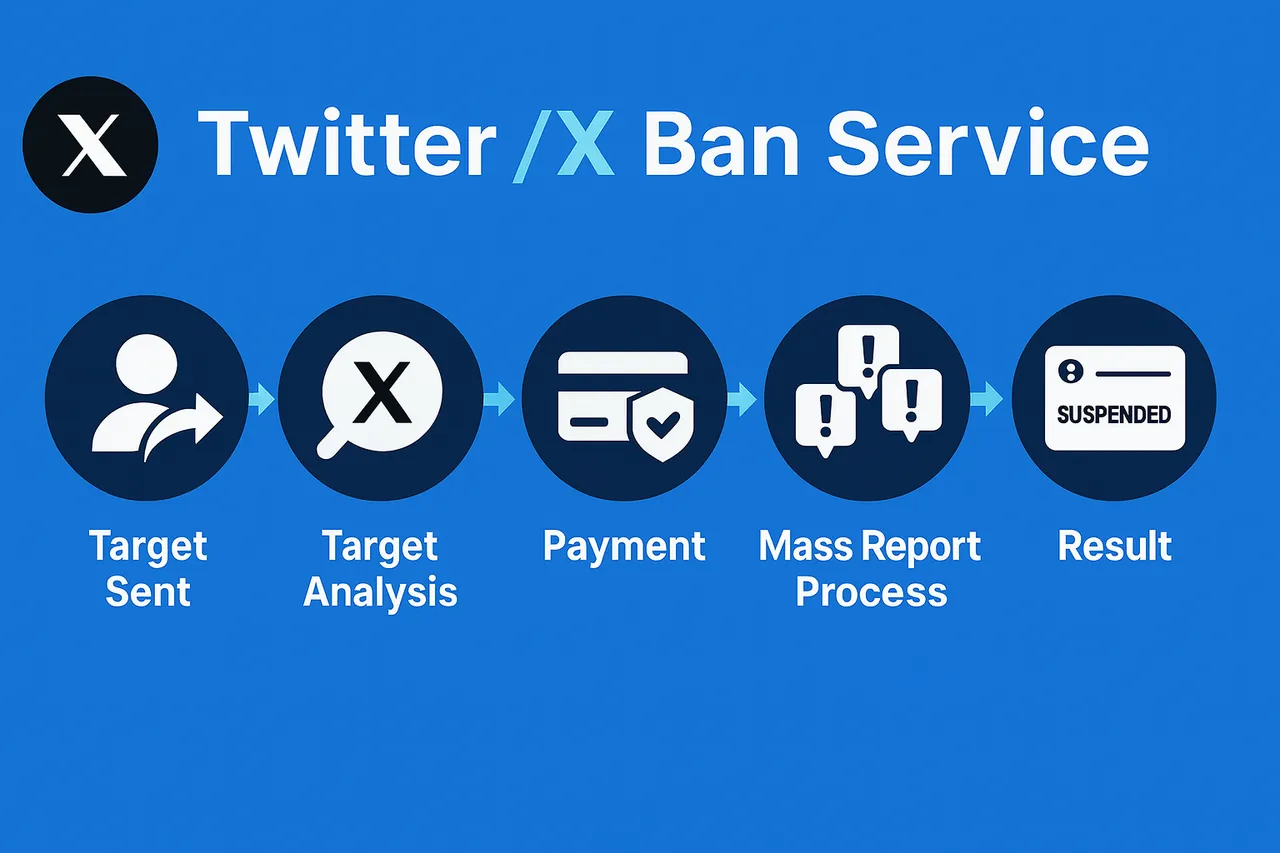
A twitter ban service files evidence-led, policy-anchored reports through X's own channels — not Discord brigades or rented bot panels. We only take cases where a real X Rule was actually broken, won't promise outcomes the platform alone decides, and never ask you for a password.
- What a twitter ban service does
- When X actually bans an account
- X Rule → form → evidence matrix
- What an honest x ban service won't do
- Evidence that gets a report actioned
- US and EU legal escalation routes
- When the offender keeps coming back
- The "X ban service" myths to ignore
- How we run an honest twitter ban service
What a twitter ban service does (and what it isn't)
A twitter ban service is a managed reporting practice that pins an X account's behaviour to a specific clause of the X Rules, packages the evidence X's reviewers ask for, and files through the platform's own forms. The work is paralegal: identify the rule, gather proof, submit cleanly, escalate if the queue closes the case too fast. Nobody outside X Corp can actually ban anyone — what an honest service improves is the quality of the report.
The platform was renamed from Twitter to X on July 23, 2023, but most search queries still use the legacy "Twitter" name, which is why the same workflow is sold under both labels — twitter ban service and x ban service — depending on who's looking. The underlying job is identical: reports get actioned when an X moderator can match the conduct to a published policy and see the proof inside the report at first read.
That last detail is what separates a serious case file from a sales-page promise. Anything labelled a twitter ban service that guarantees a suspension is selling something it cannot deliver. The platform decides, on its own internal review, every time.
When does X actually ban an account?
X suspends accounts when a reviewer can match documented conduct to one of the published X Rules: impersonation, abuse and harassment, hateful conduct, private information disclosure, non-consensual nudity, ban evasion, copyright or trademark infringement, platform manipulation, violent threats. For first-offence borderline cases, X starts with content removal or a temporary lock. Permanent suspension is reserved for severe violations or repeat offenders.
That nuance matters. People often imagine that a single report should produce a permanent ban. In practice, X's published enforcement philosophy is to "first try to educate people about our Rules and give them a chance to correct their behavior" — meaning the first action on a borderline case is usually a content removal and a warning, not the account hammer.
Permanent suspension lands fastest on hard cases: impersonation, non-consensual intimate imagery, terror content, ban evasion, severe abuse. For a private individual (not a brand or public figure), X has also stated that reports of certain categories require "a report from the actual target (or their authorized representative) prior to taking any enforcement action." That single line dictates how the case is filed.
X Rule → report form → evidence: a working matrix
The reason inexperienced reports fail is that the X Rule, the report form, and the evidence are mismatched — a copyright theft filed under "abuse," or impersonation filed without ID. Use the right rule, the right form, and the right evidence, and reports stop getting auto-closed. Match the rows below to your situation before you do anything else.
| What's happening | X Rule | Where to file | Core evidence |
|---|---|---|---|
| Fake account pretending to be you / your brand | Misleading and Deceptive Identities | X's impersonation reporting form | Government ID; ownership proof of the real handle, website, or brand |
| Investment / crypto scam using your face or name | Misleading identities + Platform manipulation | Impersonation form + per-post reports — see our scam & fraud reporting service | Side-by-side screenshots; archived scam URLs; proof of your identity |
| Non-consensual intimate images (NCII) | Non-consensual nudity and DMCA copyright (if you took the original) | NCII form + DMCA copyright complaint — handled by our intimate image removal service | Original-source proof; per-image post URLs; hash submission via StopNCII.org |
| Stolen photos, video, or content you created | Copyright (DMCA) | DMCA copyright complaint via X Help Center — see copyright & IP takedowns | URL of your original; URL of the infringing post; statement of good faith |
| Trademark on your business name / logo | Trademark | X trademark policy form | Registered trademark certificate (US PTO / EUIPO); side-by-side proof |
| Doxxing — your home address or phone posted | Private information | Private information report form | Screenshots of the published detail and your identity |
| Targeted harassment, slurs, or threats | Abuse / Hateful conduct / Violent threats | In-app abuse report flow | URLs of the posts; if you are the target, say so on the form |
| Returning account after a prior suspension | Ban evasion | Impersonation form referencing the original suspended handle | Old handle; matching profile image, bio, content pattern |
Two notes on the NCII row, because they matter for victims. First, the most effective route on X has, oddly, often been the copyright form rather than the non-consensual nudity form. A 2024 audit study by Qiwei et al. at the University of Michigan, reported by Harvard's Berkman Klein Center, found that 100% of test images filed under the DMCA copyright route were removed within roughly 25 hours, while 0% of the same images filed under X's non-consensual nudity policy were removed within three weeks. The copyright route requires you to be the original photographer; both routes are legitimate. Second, StopNCII.org lets victims hash their own intimate images so participating platforms can pre-block reposts. Some images get filtered; the route remains the consistent global option.
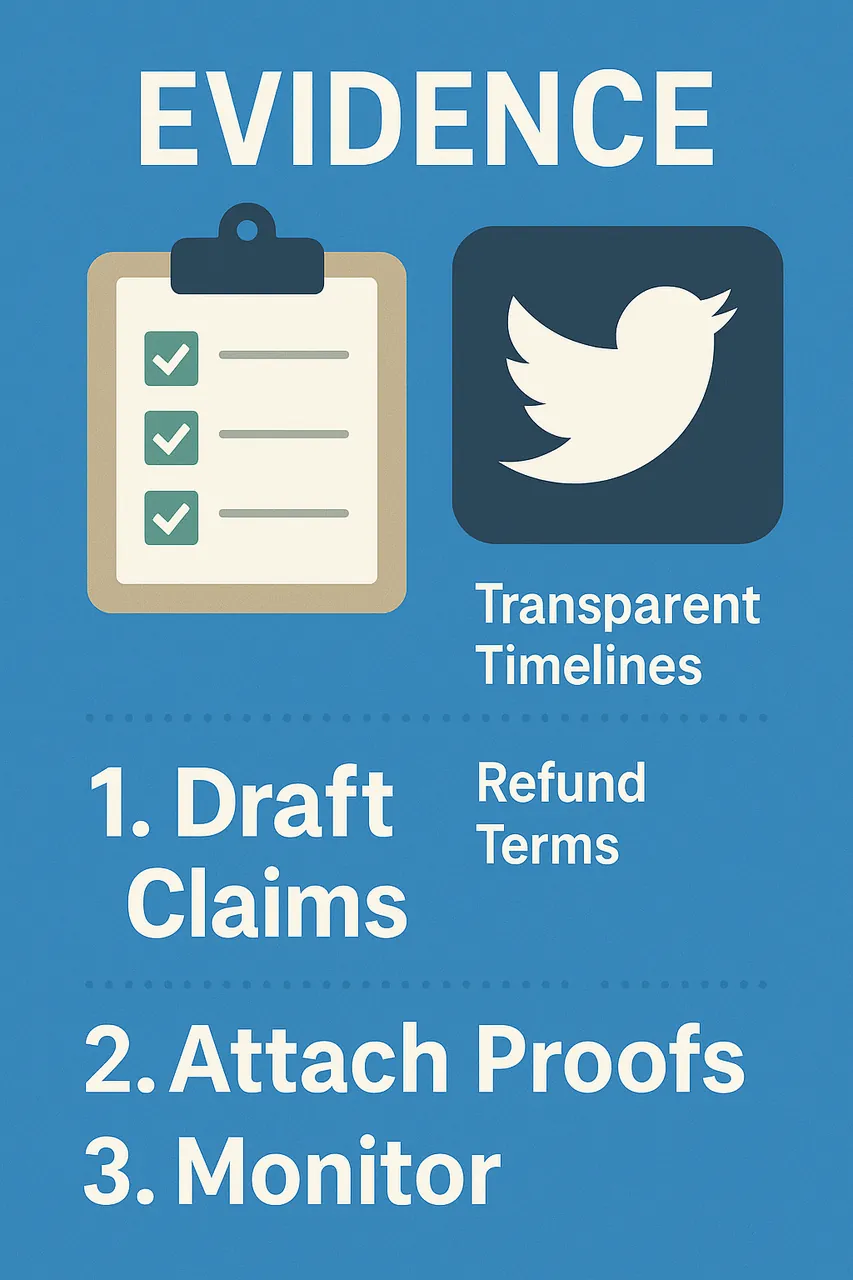
What an honest x ban service won't do
An honest x ban service will not run a coordinated mass-report from a Discord, rent a "ban bot" panel that auto-spams report forms, target lawful speech or criticism, take competitor-sabotage work, ask for your password or 2FA codes, or guarantee any outcome. Those are the patterns X's spam team is built to detect and discount — the work would be paid for and quietly ignored on arrival.
The honest version of how to get an account suspended on X is the unglamorous one: pin the behaviour to a specific rule, document it, and file through the channel built for that category. We've broken down why rented mass-report bots fail and the threat model behind volume reporting in companion pieces. The short version: X publicly weights report quality and treats burst patterns as attack signal, not user signal.
If your case is actually a complaint about somebody disagreeing with you, posting fair criticism, or competing legally with your business, we'll tell you that plainly and refund. It is not the kind of case we take.
Got a real case but the platform isn't moving? Send us the handle, what's been happening, and any evidence you've kept — we'll scope the case honestly and tell you what it would take to get the report actioned.
What evidence gets a twitter ban service report actioned?
A workable twitter ban service file contains: the offending account URL and numeric user ID, the X Rule the conduct most cleanly breaks, every offending post URL archived before the account can delete it, screenshots that show handle, content, and timestamp inside one frame, proof of who you are (and that you have the right to file as the target), and — for impersonation, trademark, or copyright — proof of ownership of the real identity, mark, or work.
Three details that experienced reporters get right and beginners miss:
- Capture the numeric user ID, not just the handle. Display names change in seconds; the numeric ID survives. You can pull it from public profile data via standard X-API readers. Filing against the ID closes the door on cosmetic dodges like a username swap mid-review.
- Archive everything before you report. Once an account knows it's being reviewed, the offending posts often vanish. Save the page in the Wayback Machine, take a full-resolution screenshot with the URL bar visible, and store the metadata. Reviewers verify archived links; they can't re-create a deleted post.
- For impersonation, the proof X actually wants is identity, not seniority. Government-issued ID, a verified profile on another platform, an official company domain on the same email — those land. Follower count, account age, and "I was here first" assertions do not.
This is the part of the work that takes hours and is invisible from the outside, which is also why low-cost "ban services" don't actually do it. The packet is what does the work, not the click.
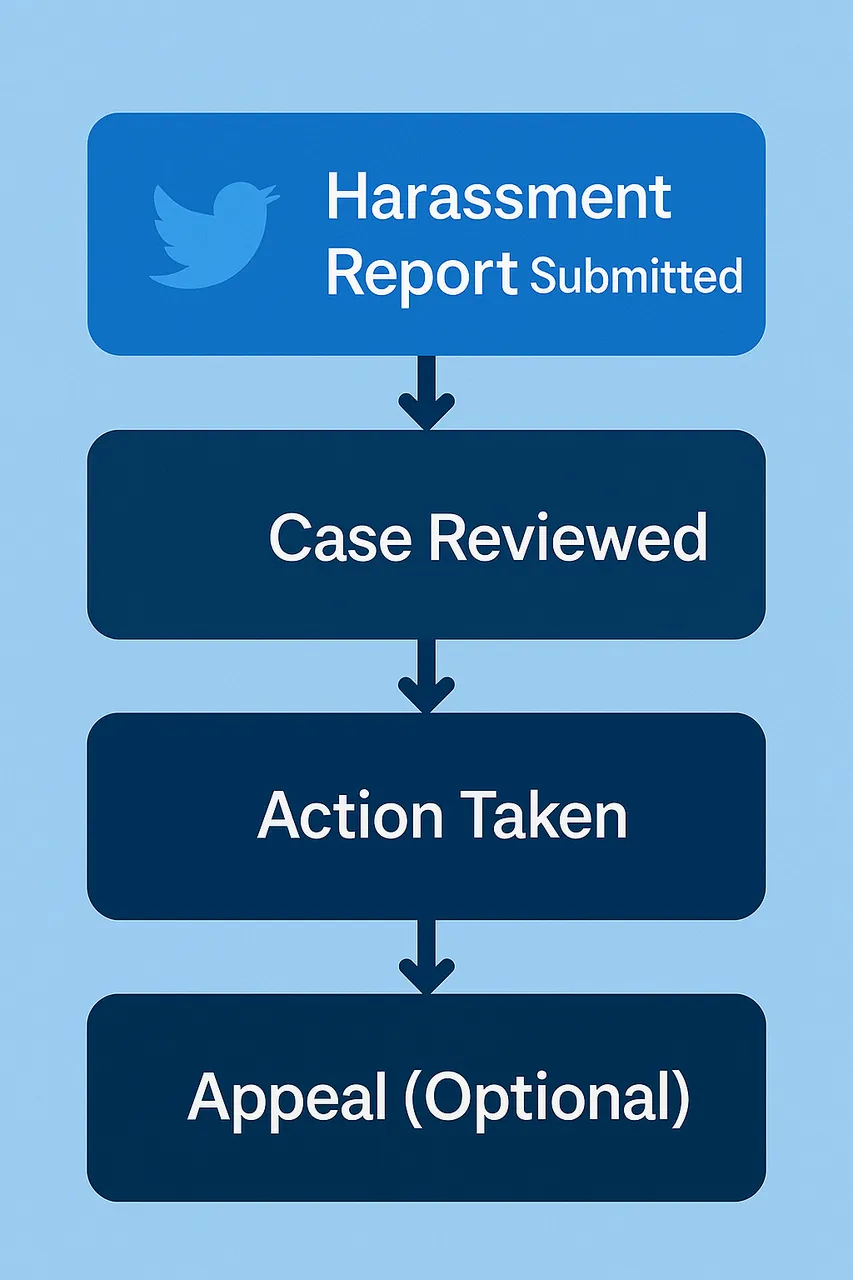
US and EU legal routes when X won't act
When a platform report stalls, US and EU users have legal escalation paths X is obliged to respond to. In the US that means the DMCA for copyright on X, the FTC and IC3 for fraud, and state privacy laws. In the EU that means the Digital Services Act's Article 16 notice mechanism for illegal content, the GDPR Article 17 right to erasure for personal data, and national Data Protection Authorities.
US escalation. A DMCA copyright complaint to X is a statutory notice under 17 U.S.C. § 512 — X removes the content in good-faith response or loses the safe-harbour defence on that post. For consumer-facing scams that misuse your identity, the FTC's reportfraud.ftc.gov portal and the FBI's IC3 at ic3.gov build the criminal record that supports later subpoenas and civil action. State-level laws also matter: California, Illinois, and Texas all have intimate-image-abuse statutes a victim's lawyer can wield directly.
EU escalation. Under the EU's Digital Services Act, X has been required since 2024 to operate a "notice and action" mechanism for illegal content. An Article 16 notice triggers a formal review with documentation requirements the platform must meet. Separately, the GDPR's right to erasure (Article 17) lets EU residents demand removal of personal data, including images, that no longer have a lawful basis to be processed. If X stonewalls, the next stop is the user's national Data Protection Authority — Ireland's DPC has jurisdiction over X's EU establishment and accepts complaints in English.
For impersonation and brand abuse specifically, our brand protection and impersonation removal services run these legal routes in parallel with the platform reporting, on cases where a sole X report isn't enough.
When the offender keeps making new accounts
"IP ban" is forum folklore — X does not enforce by IP address, which would block bystanders on shared mobile networks and corporate offices. What X enforces is ban evasion: under X's published policy, returning accounts are linked to the original via device, contact, and behavioural signals, and X "may suspend any account that is being operated to circumvent an X enforcement action" — at first detection in clear cases.
Practically, that means a re-launching impersonator can be reported through the impersonation form with the original suspended username in the "who is being impersonated" field. From X's own guidance: select Report → "They're pretending to be me or someone else" → "Someone else" → provide the original suspended username and evidence. Linked accounts come down faster than the first one did, because X's enforcement system has already adjudicated the underlying conduct.
Two patterns help the ban-evasion case run cleanly. Keep the trail — a timeline of "first banned on date X; new account created date Y with the same handle pattern, same profile photo, same content" gives the reviewer the connection in a single read. Don't engage publicly — tagging the new handle and pointing out the connection often slows enforcement and gives the offender content to use against you. File quietly, track, escalate to legal if needed.
For longer-running campaigns of returning accounts — common with serial impersonators and recurring scam rings — we move the case into brand protection monitoring, so a new account gets filed against within hours of appearing, not days.
The "X ban service" myths a paid panel won't tell you
The recurring fantasies about getting accounts banned on X — "buy ban panel," "rented Discord brigade," "$5 Fiverr X ban service," "IP ban," "find out who reported me" — are exactly what X's systems discount or, in the case of the brand promises, were never going to work. Knowing the myths is half the work of choosing a real provider.
- "Guaranteed ban." Nobody can guarantee a ban. The platform decides on its own internal review. A guarantee on a sales page is a hallmark of a scam.
- "Mass-reporting works because the algorithm counts reports." It used to look like that; it does not work now. X publicly weights report quality and detects coordinated patterns. Coordinated mass-reporting against an X account reads as attack, not signal.
- "Rented bot panels file thousands of reports for you." What you actually get is a screenshot of an unattended dashboard. The reports either never reach X or are auto-filtered as spam on arrival.
- "$5–10 Fiverr ban service." A real ban packet on a contested handle costs hours of evidence work — archived links, ID, timeline, the right form. Anyone offering it for the price of a coffee either does nothing or rents you a bot.
- "IP ban so they can never come back." X does not enforce by IP. Ban evasion is enforced through device, contact, and behavioural fingerprinting — which is far more effective and doesn't punish bystanders.
- "Find out who reported me." X does not reveal reporter identity. That confidentiality is part of why people use the system at all.
If you're choosing between a paid panel and a service that asks you about your case before quoting a price, the second one is the one that does the actual work. The first one sells the dashboard.
How we run an honest twitter ban service
Our twitter ban service runs five stages: an honest eligibility check, a verified identity-and-ownership pack, evidence packaging against a specific X Rule, filing through the right official channel, and tracking through to a decision with US/EU legal escalation on cases that need it. No passwords, no brigades, no false promises.
- Eligibility. Half the inquiries we receive describe situations that aren't violations of the X Rules — fair criticism, public disagreements, lawful competitor activity. We say so plainly and refund. Cases with a real rule violation and proof of who the legitimate party is go forward.
- Identity & ownership pack. Government ID for individuals; trademark certificate or registry document for brands; original-source proof for content. This is what removes the "we couldn't verify you" auto-close.
- Evidence packaging. Archived URLs, full-frame screenshots with handle/content/timestamp, the numeric user ID, the X Rule the conduct most cleanly breaks, and — where relevant — a side-by-side authenticity comparison.
- Filing. The right form for the category, written in the language reviewers act on, and submitted by the right party (the target or an authorized representative).
- Tracking and escalation. Auto-closures get re-filed with stronger framing. Stalled cases get the US/EU legal route in parallel. We send you the timeline and a copy of every filing.
Based on cases we handled over the last twelve months, roughly one in three contacts becomes an active file; the rest either don't qualify (we say so) or resolve through self-service guidance we give for free. Of the files we open, most see the offending content removed; permanent account suspensions land most reliably on impersonation, NCII, and ban-evasion cases where the rule violation is unambiguous and the proof is clean. We never publish industry-style success-rate numbers — the cases that come to us are by definition the hard ones, and a "97% success rate" stat would be a sales artefact, not a fact. If your case fits, our operators read it, scope it honestly, and run it through the right channel. If it doesn't, we say so. That boundary is what makes the work mean anything.
Frequently asked questions
Is a twitter ban service the same as an x ban service?
Yes. The platform was renamed from Twitter to X in July 2023, but the underlying job — pinning an account's conduct to a published platform rule, packaging evidence, and filing through the official form — is identical. Most providers use both names because most search queries still use both. The work is the same.
Can you guarantee an X account will get banned?
No, and you should be wary of anyone who does. The platform alone decides whether to suspend an account, after its own review. We can dramatically improve how the case is prepared, filed, and escalated, but the final call sits with X. The only thing we guarantee is honesty: a clear eligibility assessment and a properly filed report.
How long does X take to act on a ban report?
It varies sharply by category. Impersonation and NCII cases that are well-documented often get a decision in days; abuse and harassment cases can take weeks; copyright (DMCA) cases are typically the fastest because they are statutory. We track each case and re-file or escalate if X auto-closes a strong report, which happens — particularly on the first submission.
Will X tell the reported account who reported them?
No. X has stated it does not reveal the identity of a reporter in the normal flow. The "who reported me" lookup is a myth. The exception is legal process — a subpoena can compel disclosure — but that is rare and only in serious cases. For ordinary policy reports, your identity stays inside X's systems.
What if the same person keeps making new accounts?
That is the ban-evasion scenario, which X's own policy is built to handle. Returning accounts get linked to the original through device, contact, and behavioural signals, and X may suspend any account that is being operated to circumvent a prior action. Each new account can be reported with the original suspended handle as reference, and linked suspensions tend to land quickly.
Do you work with EU and US clients?
Yes — and the legal escalation paths are different, which matters. US cases can lean on the DMCA, the FTC's reportfraud.ftc.gov, and the FBI's IC3. EU cases can lean on the Digital Services Act's Article 16 notice mechanism, the GDPR right to erasure, and national Data Protection Authorities. We've handled cases from both regions and tailor the escalation accordingly.
Can I get someone banned on Twitter just because they offended me?
No. If the account isn't breaking the X Rules or breaking the law, there is no honest route to its removal — and an attempt at false reporting often results in the reporter's account being penalised instead. If you tell us what happened, we'll say plainly whether it qualifies, before any money changes hands.
What evidence should I have ready before contacting you?
The offending account URL or numeric user ID, the worst posts archived (Wayback Machine or screenshots with the URL bar visible), a one-line description of the harm, and — if it applies — proof of who you are or what you own (ID, trademark certificate, photo metadata). If you don't have everything, message us anyway; we'll tell you what's missing.